
Views: 0 Author: Site Editor Publish Time: 2026-10-14 Origin: Site


Polyvinyl chloride (PVC) degrades rapidly at the elevated temperatures required for commercial processing. When material temperatures hit 160°C to 210°C inside an extruder barrel, thermal degradation starts immediately. Without precise chemical intervention, PVC undergoes rapid dehydrochlorination during extrusion or molding. This auto-catalytic reaction releases hydrogen chloride (HCl) gas, causes severe discoloration known as the "zipper" effect, and permanently destroys the polymer's mechanical properties. The direct result is high scrap rates, brittle parts, and premature product failure in the field. To mitigate these processing limitations while adhering to strict environmental regulations, manufacturers are shifting toward organic co-stabilizers. Integrating a DHP PVC stabilizer (dihydropyridine derivative) offers a targeted chemical mechanism to interrupt degradation pathways, extend the processing window, and maintain structural integrity.
Targeted HCl Scavenging: DHP acts as a highly efficient organic co-stabilizer, actively neutralizing hydrogen chloride before it can catalyze further polymer degradation.
Superior Early Color Hold: By disrupting the formation of conjugated double bonds, DHP formulations prevent the initial yellowing of PVC, which is critical for transparent and color-sensitive applications.
Synergistic Performance: A DHP PVC stabilizer delivers maximum ROI when formulated alongside Calcium-Zinc (Ca-Zn) primary stabilizers, replacing the need for toxic heavy metals like lead or cadmium.
Broad-Spectrum Protection: Beyond primary stabilization, DHP provides secondary antioxidant benefits and proves highly effective in stabilizing recycled PVC streams and complex polymer blends.
Implementation Precision: Successful adoption requires strict dosage control and compatibility testing to prevent secondary issues such as plate-out or plasticizer migration during continuous processing.
Table of Contents
PVC thermal degradation occurs when the polymer is exposed to excessive heat and mechanical shear during extrusion or molding. High processing temperatures can trigger dehydrochlorination, releasing hydrogen chloride (HCl) and forming conjugated polyene sequences. This causes discoloration, reduced mechanical performance, and processing instability.
PVC dehydrochlorination begins at thermally unstable sites along the polymer chain. As heat causes HCl release, additional degradation reactions can accelerate, forming longer polyene sequences. These structural changes are responsible for the progressive yellowing, browning, and eventual darkening of PVC materials.

Uncontrolled PVC heat degradation can reduce product quality, increase manufacturing waste, and contribute to equipment corrosion. Common processing problems include:
Degradation Problem | Main Cause | Impact on PVC Products |
|---|---|---|
Yellowing and Discoloration | Formation of conjugated polyenes | Poor color stability |
Mechanical Property Loss | Polymer structural degradation | Reduced durability |
Processing Instability | Excessive heat and shear | Inconsistent product quality |
Equipment Corrosion | Released hydrogen chloride | Increased maintenance requirements |
DHP PVC stabilizer is an organic co-stabilizer used to improve the thermal stability and color retention of PVC formulations. It works alongside primary heat stabilizers to help reduce heat-induced degradation during processing.
Explore MSN Chem's DHP PVC Stabilizer (CAS 36265-41-5) for product specifications and application information.
DHP co-stabilizers can enhance the performance of suitable PVC heat stabilization systems by limiting degradation-related reactions. When properly formulated, they help maintain processing stability during extrusion and other high-temperature manufacturing operations.
PVC color stability is important for white profiles, transparent products, and other appearance-sensitive applications. DHP can help improve initial color retention and reduce heat-induced yellowing when used with compatible primary stabilizers.
DHP PVC heat stabilizers may help reduce degradation-related fluctuations during processing, supporting more consistent product appearance and quality. Their effectiveness depends on the complete stabilizer package, processing temperature, residence time, and formulation.
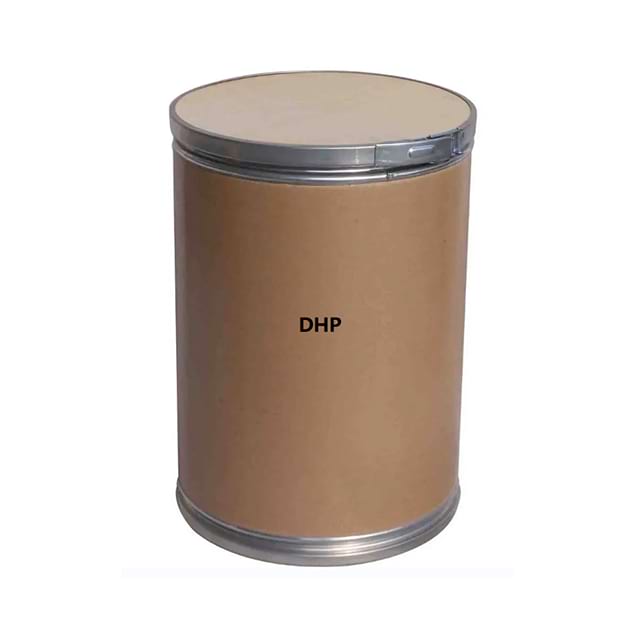
DHP PVC stabilizer is an organic co-stabilizer used to enhance the thermal stability of rigid PVC formulations. Compared with traditional lead-based and cadmium-containing systems, modern calcium-zinc (Ca-Zn) stabilizers offer alternatives for applications with heavy-metal restrictions.
DHP works alongside primary stabilizers to improve processing stability and reduce discoloration risks. It is particularly useful in Ca-Zn formulations where additional protection against heat-induced degradation is required.
Explore MSN Chem's DHP PVC Stabilizer (CAS 36265-41-5) for product specifications and application information.
Stabilizer System | Main Advantages | Key Limitations |
|---|---|---|
Lead-Based Stabilizers | Strong thermal stability and processing performance | Significant toxicity and regulatory restrictions |
Cadmium-Based Systems | Effective heat stabilization and color retention | Health and environmental concerns |
Calcium-Zinc (Ca-Zn) | Heavy-metal-restricted formulation alternative | May require additional co-stabilizers |
Ca-Zn + DHP | Potential improvements in color retention and heat stability | Performance depends on formulation and dosage |
Calcium-zinc PVC stabilizers can experience zinc-related degradation during prolonged heat exposure. DHP may enhance the effectiveness of mixed-metal stabilization systems, helping improve thermal stability and reduce discoloration.
The combination can offer three practical advantages:
Improved color retention: Helps limit yellowing during processing.
Enhanced thermal stability: Supports longer processing periods under controlled conditions.
Formulation flexibility: Allows manufacturers to optimize stabilizer performance according to PVC processing requirements.
For additional background, read MSN Chem's Calcium-Zinc PVC Stabilizer vs. Lead Stabilizer comparison.
Recycled PVC processing presents additional thermal stability challenges because previously processed materials may contain partially depleted stabilizer systems.
DHP can be evaluated as part of a secondary stabilization package for recycled rigid PVC. However, its effectiveness depends on the existing additives, contamination levels, and thermal history of the material. Formulation testing is necessary before large-scale production.
DHP co-stabilizers help protect PVC from heat-induced degradation during extrusion and molding. When properly formulated, they may improve color consistency, processing stability, and finished product quality.
PVC thermal stability is essential for controlling discoloration and degradation during high-temperature processing. DHP can enhance the performance of suitable stabilizer systems, providing additional protection during extrusion.
This is particularly relevant to rigid PVC profiles, sheets, and other products requiring stable processing conditions.
PVC melt stability influences extrusion consistency and finished product dimensions. Excessive thermal degradation can cause discoloration, unstable flow, and surface defects.
By supporting thermal stabilization, DHP may help reduce degradation-related processing variations. However, actual melt viscosity and dimensional accuracy also depend on PVC grade, lubricants, processing aids, and equipment settings.
Proper PVC heat stabilization helps reduce the risk of thermal discoloration and material degradation during extrusion. This may lower the frequency of material purging and production interruptions.
Key potential processing improvements include:
Processing Factor | Potential Benefit of DHP |
|---|---|
Color Stability | Reduced heat-induced yellowing |
Thermal Resistance | Improved protection during heat exposure |
Extrusion Consistency | Fewer degradation-related variations |
Product Appearance | More consistent surface quality |
Production Efficiency | Potential reduction in degradation-related downtime |
MSN Chem recommends a DHP usage range of 0.05%–0.2%, depending on the substrate, processing conditions, and performance requirements. DHP is used as a secondary stabilizer rather than a universal replacement for the primary heat stabilizer.
Manufacturers should evaluate initial color, dynamic heat stability, compatibility, and finished product performance before determining the optimal dosage.
Processing Parameter | Standard Ca-Zn Formulation | Ca-Zn + DHP Formulation | Operational Benefit |
|---|---|---|---|
Max Safe Melt Temperature | 185°C - 190°C | 195°C - 205°C | Allows better fusion for rigid PVC without burning. |
Motor Torque Fluctuation | High (Prone to surging) | Low (Stable melt flow) | Reduces wear on the gearbox and lowers energy draw. |
Safe Residence Time in Die | Short (Risk of flow marks) | Extended | Enables the use of complex, multi-chamber tooling. |
Line Speed / Output | Baseline | +10% to +15% Increase | Higher throughput due to stable high-shear processing. |
Request sample formulations and detailed technical data sheets from your chemical supplier to verify DHP purity and compatibility with your specific base resin and plasticizer package.
Conduct baseline rheological testing, including Congo Red and dynamic milling, against your current stabilizer package to identify exact improvements in thermal stability time.
Run controlled, small-scale pilot extrusion trials to dial in the exact DHP-to-primary-stabilizer ratio, monitoring motor torque and melt pressure closely.
Adjust your internal and external lubricant packages during these pilot trials to proactively mitigate any risk of plate-out on your calibration sleeves and extrusion dies.
A: It acts as an advanced organic co-stabilizer that intercepts and neutralizes hydrogen chloride (HCl) gas released during high-temperature thermal processing. By rapidly scavenging this acidic byproduct, DHP prevents the auto-catalytic degradation loop that destroys the polymer's structural integrity and aesthetic appearance.
A: Early color hold is achieved by chemically disrupting the formation of conjugated double bonds along the polymer chain. DHP saturates these double bonds, preventing the development of long polyene sequences that absorb visible light and cause the clear or white material to turn yellow.
A: DHP is not designed to be a standalone primary stabilizer. While it cannot replace heavy metals on its own, it acts as a highly effective co-stabilizer. When paired with primary non-toxic systems like Calcium-Zinc, it enables the complete and safe removal of lead and cadmium.
A: Ca-Zn stabilizers are prone to "zinc-burning," a sudden catastrophic degradation caused by zinc chloride accumulation in the melt. DHP chemically regenerates the active components of the Ca-Zn system and absorbs the zinc chloride, effectively suppressing the burn and extending the processing window.
A: It performs exceptionally well. Recycled streams often have depleted stabilizer levels and mixed thermal histories. DHP provides broad-spectrum protection, neutralizing residual degradation catalysts and offering the robust thermal stability required to process complex blends like PVC/HDPE without mechanical failure.
A: Incorrect dosing or poor formulation balance can contribute to plate-out. However, when properly formulated with the correct ratio of internal and external lubricants, DHP integrates cleanly into the melt. Rigorous compatibility testing is required to prevent residue buildup on calibration sleeves and dies.


