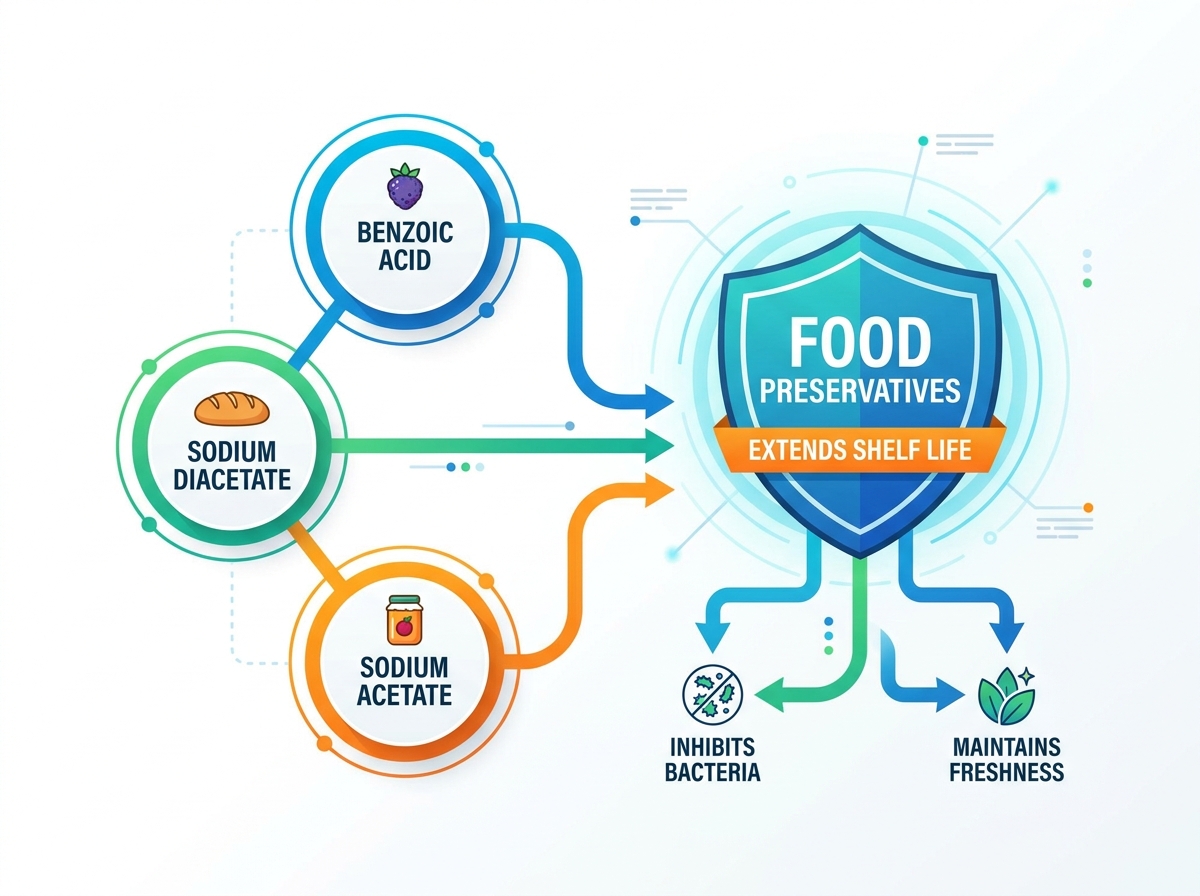
Commercial food formulation requires a precise balance between extending shelf life, maintaining sensory integrity, and adhering to strict regulatory safety thresholds. Spoilage organisms and oxidative degradation constantly threaten product stability, forcing formulators to rely on proven chemical interventions. Selecting the wrong antimicrobial or antifungal agent can lead to premature spoilage, unacceptable flavor alterations, or costly compliance failures, particularly when formulations have strict pH or moisture constraints. You need to know exactly how your matrix interacts with specific compounds to avoid catastrophic batch failures.
This technical evaluation examines three standard Food Preservatives—Benzoic Acid, Sodium Diacetate, and Sodium Acetate—comparing their mechanisms of action, application suitability, and regulatory frameworks to guide formulation and procurement decisions. Understanding the exact environmental requirements of these compounds ensures optimal efficacy and product safety on the production floor.
Key Takeaways
pH Dependency is Critical: Benzoic acid and its salts are highly effective bacteriostatic and fungistatic agents, but their efficacy drops precipitously in non-acidic environments (pH > 4.5).
Dual-Functionality in Diacetates: Sodium diacetate offers a distinct advantage in bakery and meat applications by acting as both a potent anti-mold agent and a flavor enhancer, often outperforming benzoic acid in specific moisture-rich matrices.
Buffering and Synergy: Sodium acetate primarily serves as a pH buffer and mild preservative, frequently utilized in conjunction with other active agents to stabilize processed foods without harsh sensory impacts.
Regulatory Baselines: All three compounds are widely recognized as safe (GRAS) at low concentrations, but formulators must strictly monitor maximum allowable limits set by bodies like Health Canada and the FDA to ensure compliance.
The Role of Food Preservatives in Commercial Formulation
Problem Framing (Success Criteria)
Defining the baseline requirements for chemical preservation involves targeting specific microbial threats, preventing oxidation, and achieving measurable shelf-life extension. Formulators must evaluate the exact spoilage mechanisms threatening their specific product matrix. Success requires halting the proliferation of bacteria, yeast, and mold without compromising the structural or sensory integrity of the food. The chosen compound must maintain stability throughout the entire supply chain, from high-heat processing to ambient retail shelving. If a preservative degrades during the thermal kill step, the product will spoil in the warehouse.
We measure success by looking at total plate counts over a 90-day or 180-day accelerated shelf-life study. If the yeast and mold counts remain below the acceptable threshold without altering the organoleptic properties of the baseline formulation, the preservative system is functioning correctly. You must also factor in the packaging environment. Modified atmosphere packaging (MAP) changes the oxygen availability, which directly impacts how chemical preservatives perform against aerobic versus anaerobic organisms.
Functional Classifications
Chemical agents fall into distinct functional categories based on their primary mode of action. Antimicrobial agents actively inhibit bacterial growth, while antimycotics specifically target yeasts and molds. Other chemical agents focus entirely on preventing oxidation, stopping lipid rancidity and color degradation. Understanding these distinctions prevents the misapplication of compounds. Using a pure antioxidant to control a fungal threat will result in rapid product failure.
Bacteriostatic Agents: Prevent the multiplication of bacteria without necessarily killing them.
Fungistatic Agents: Inhibit the growth of mold and yeast.
Antioxidants: Scavenge free radicals to prevent lipid oxidation.
Evaluation Dimensions
Selecting the correct preservative requires mapping the chemical properties of the additive against the physical parameters of the food matrix. The most critical dimensions include the pH level, water activity (Aw), and processing temperatures. A compound highly effective in a liquid beverage may fail completely in a dry baked good. Furthermore, the desired sensory outcomes dictate maximum usage levels, as many effective compounds introduce astringent, sour, or metallic off-notes at higher concentrations.
Water activity is particularly critical. Microorganisms need free water to survive. If your product has an Aw of 0.85, you are primarily fighting mold and yeast. If the Aw is 0.95, you are fighting aggressive bacterial pathogens like Listeria and Salmonella. Your preservative choice must align with the specific threat profile dictated by the moisture content.
The Shift in Preservative Strategy
Modern formulators face the complex challenge of balancing traditional, highly effective chemical agents against growing consumer demand for transparent labeling and minimal flavor interference. This shift requires maximizing the efficiency of established compounds through synergistic blending and strict environmental control within the food matrix. By optimizing the pH and water activity, formulators can reduce the total volume of chemical additives required, achieving clean-label goals without sacrificing microbiological safety.
Benzoic Acid and Sodium Benzoate: Technical Profile
Mechanism of Action
Benzoic acid functions by penetrating the microbial cell wall in its undissociated state. Once inside the cell, the higher internal pH causes the acid to dissociate, releasing protons. This rapid influx of protons disrupts the intracellular pH balance, forcing the microorganism to expend massive amounts of energy to pump the protons back out. This energy depletion severely disrupts intracellular enzyme activity, ultimately halting cellular reproduction and inducing microbial death.
The efficiency of this process relies entirely on the external environment remaining acidic. If the external pH is too high, the benzoic acid dissociates before it can penetrate the cell wall, rendering it completely ineffective. This is why you cannot use benzoates in neutral pH products like milk or fresh meat.
Bacteriostatic and Fungistatic Activity
The target microbial spectrum for benzoic acid highlights its exceptional efficacy against yeasts and molds. It provides robust fungistatic control, making it a primary defense against surface spoilage in liquid and semi-solid matrices. While it offers moderate control over foodborne bacteria, it is rarely deployed as a standalone bacteriostatic agent against aggressive bacterial pathogens, usually requiring combination with other hurdles like low water activity or thermal processing.
Application Constraints (pH Dependency)
The efficacy of benzoic acid is strictly dictated by the pH of the surrounding environment. It requires highly acidic conditions to remain in its undissociated, active form. Optimal efficacy is achieved only in matrices with a pH below 4.5. As the pH rises above this threshold, the compound rapidly dissociates, losing its ability to penetrate microbial cell walls and rendering it virtually useless as a protective agent.
Product pH Level
Percentage of Undissociated Benzoic Acid
Preservative Efficacy
3.0
94%
Excellent
4.0
60%
Good
5.0
13%
Poor
6.0
1.5%
Ineffective
Primary Use Cases
Due to its strict pH requirements, benzoic acid and its highly soluble salt, sodium benzoate, are standard applications in high-acid environments. They dominate the formulation of carbonated beverages, fruit juices, acidic condiments, and pickled products. In these low-pH matrices, the compound remains highly active, providing exceptional shelf-life extension against yeast and mold proliferation.
When batching beverages, operators typically dissolve sodium benzoate in water before adding it to the main mixing tank. Adding dry benzoate powder directly to a highly acidic syrup can cause localized precipitation, where the benzoate converts back into insoluble benzoic acid crystals, creating a gritty texture and leaving the rest of the batch unprotected.
Formulation Risks
Formulators must evaluate specific chemical risks when deploying benzoates. A critical concern is the potential for benzene formation when sodium benzoate is combined with ascorbic acid (Vitamin C) under conditions of high heat and light exposure. Additionally, higher concentrations of benzoates can introduce distinct sensory off-notes, often described as a chemical astringency or burning sensation, which can ruin the flavor profile of delicate beverages.
Sodium Diacetate: Dual-Action Antimicrobial and Flavor Enhancer
Chemical Composition
Sodium diacetate is a specialized chemical compound defined as a 1:1 molecular complex of sodium acetate and acetic acid. This unique crystalline structure stabilizes the volatile acetic acid, allowing it to be handled as a dry, free-flowing powder. This composition provides the functional benefits of liquid acetic acid without the handling hazards and volatility associated with liquid dosing in industrial environments.
Mechanism of Action
The primary advantage of sodium diacetate lies in its slow release of acetic acid when introduced to moisture. This controlled release provides superior anti-mold performance and moisture control compared to standard organic acids. The acetic acid penetrates microbial cell walls, lowering the intracellular pH and disrupting metabolic functions, while the sodium acetate component provides mild buffering capacity.
Targeted Antimicrobial Spectrum
Sodium diacetate delivers highly effective inhibition of mold and rope-forming bacteria, specifically targeting organisms like Bacillus mesentericus which plague commercial baking operations. Beyond bakery applications, it demonstrates significant efficacy against common food pathogens, playing a critical role in controlling Listeria monocytogenes in processed and ready-to-eat meat products.
Inhibits Aspergillus and Penicillium mold strains in baked goods.
Controls Listeria outgrowth in vacuum-packaged deli meats.
Suppresses rope-forming Bacillus spores that survive the baking process.
Primary Use Cases
This compound sees widespread adoption across multiple food sectors. In commercial baking, it is the standard for rope and mold inhibition. In meat processing, it is injected or added to formulations for strict Listeria control. Furthermore, its distinct flavor profile makes it a primary ingredient in dry snack seasonings, specifically providing the characteristic tang in salt and vinegar flavored chips and extruded snacks.
Comparative Advantage
Sodium diacetate frequently outperforms benzoic acid in specific scenarios, particularly in high-moisture matrices where strict low-pH environments cannot be maintained. Because it does not rely as heavily on extreme acidity to function, it provides robust protection in neutral or slightly acidic foods like bread and processed meats. Additionally, where a tangy, acetic flavor profile is advantageous, sodium diacetate serves a dual purpose, eliminating the need for separate flavoring and preserving agents.
Sodium Acetate: Buffering Agent and Shelf-Life Extender
Mechanism of Action
Sodium acetate primarily functions as a systemic pH buffer within food matrices. It stabilizes the hydrogen ion concentration, preventing rapid shifts in acidity that could compromise product texture, flavor, or safety. While its primary role is buffering, it also acts as a secondary, mild antimicrobial agent, creating an environment less hospitable to bacterial proliferation by maintaining a stable, slightly hostile pH.
Primary Use Cases
The buffering capacity of sodium acetate makes it indispensable in processed meats, ready-to-eat meals, and complex sauces. In these applications, it stabilizes the food matrix and prevents pH drift during prolonged storage. Preventing this drift is critical, as a rising pH could suddenly render other primary antimicrobial agents ineffective, leading to rapid, unexpected spoilage.
In meat processing, sodium acetate is often added to the brine injection system. It helps maintain the water-holding capacity of the muscle proteins while simultaneously creating a buffered environment that slows down the growth of lactic acid bacteria, which are responsible for souring in vacuum-packaged meats.
Synergistic Formulation
Sodium acetate is rarely used in isolation for preservation. Instead, formulators utilize it in conjunction with lactates or diacetates to compound antimicrobial efficacy. This synergistic approach allows manufacturers to achieve robust microbiological control without exceeding the sensory thresholds of any single chemical agent, maintaining a cleaner flavor profile while ensuring safety.
Toxicological Profile and Safety Assessment
Extensive safety data, including assessments from PubMed and EFSA, confirm the high safety margin of sodium acetate. It maintains Generally Recognized As Safe (GRAS) status when used at low, functional concentrations. The human body naturally metabolizes acetate, making it a highly tolerated compound with minimal toxicological risk when deployed within standard manufacturing guidelines.
Comparative Evaluation: Choosing the Right Food Preservatives
Features-to-Outcomes (Matrix Matching)
Selecting the correct agent requires matching the compound's features to the specific food matrix. Defaulting to Benzoic Acid or Sodium Benzoate is standard practice for beverages and high-acid foods where the pH is naturally low. For bakery products and dry seasonings, Sodium Diacetate is the preferred choice due to its anti-mold properties and flavor contribution. Processed meats benefit most from utilizing Sodium Acetate and Diacetate blends to manage both pH stability and pathogen control.
Preservative
Primary Function
Optimal pH Range
Best Applications
Sodium Benzoate
Yeast & Mold Inhibition
Below 4.5
Beverages, Pickles, Sauces
Sodium Diacetate
Mold & Rope Control, Flavor
4.5 - 6.5
Bakery, Snacks, Processed Meats
Sodium Acetate
pH Buffering, Mild Antimicrobial
5.0 - 7.0
Ready Meals, Meat Blends
Antimicrobial Efficacy vs. Mold & Yeast
When contrasting performance, the anti-mold capabilities of sodium diacetate excel in semi-solid, higher pH environments like bread. Conversely, the bacteriostatic and fungistatic profile of sodium benzoate is unmatched in liquid, highly acidic environments. Formulators must identify whether their primary threat is fungal growth in a neutral matrix or yeast fermentation in an acidic liquid.
Regulatory Compliance and Safety Assessments
Navigating regulatory frameworks is mandatory. Formulators must consult the Health Canada List of Permitted Preservatives and FDA guidelines to ensure compliance. Understanding maximum usage levels is critical; for example, many jurisdictions strictly enforce a 0.1% limit for sodium benzoate in finished food products. Exceeding these limits results in immediate product recalls and regulatory action.
Sensory Impact and Consumer Perception
Chemical interventions always carry sensory trade-offs. Formulators must balance the sour, acetic notes introduced by diacetates against the potential chemical burn or astringency caused by high levels of benzoates. Consumer perception often dictates the allowable limits of these compounds, forcing manufacturers to find the lowest effective dose that maintains safety without altering the intended flavor profile.
Scalability and Procurement
Industrial application requires evaluating cost-in-use, raw material stability, and supply chain availability. Sodium benzoate offers excellent solubility rates during industrial mixing, making it highly scalable for continuous beverage production. Sodium diacetate provides superior handling as a dry powder compared to liquid acids, simplifying storage and batching processes on the factory floor.
Implementation Risks and Mitigation Strategies
Risk: Incomplete Dispersion
Localized spoilage frequently occurs due to uneven distribution of the preservative in solid or semi-solid food matrices. If the antimicrobial agent clumps or fails to dissolve, pockets of unprotected food will rapidly degrade. Mitigation involves utilizing highly soluble salt forms, such as selecting sodium benzoate over pure benzoic acid, and optimizing the mechanical mixing phases to ensure homogenous distribution throughout the batch.
Pre-dissolve powdered preservatives in a liquid carrier before adding to the main mixer.
Increase mixing RPMs during the preservative addition phase.
Conduct dispersion testing by sampling multiple zones of the mixing tank.
Risk: Regulatory Non-Compliance via Stacking
Exceeding maximum allowable limits can happen unintentionally when multiple ingredients contain naturally occurring benzoates or acetates. This stacking effect can push the final formulation over legal thresholds. Mitigation requires comprehensive raw material auditing, requiring suppliers to disclose all sub-ingredients, followed by rigorous final-product laboratory testing to verify total compound concentrations.
Risk: pH Drift
Preservative failure is imminent if the food matrix pH rises above the compound's effective range over time. A product that is safe at bottling may spoil weeks later if the acidity drops. Mitigation demands incorporating robust buffering agents, like sodium acetate, alongside the primary antimicrobial to lock the pH in place and ensure the primary agent remains active throughout the entire intended shelf life.
Conclusion
Initiate pilot batch testing to evaluate the sensory impact of the chosen preservative at target concentrations before scaling up.
Verify pH stability over a 90-day accelerated shelf-life study to ensure the matrix remains within the effective range of the antimicrobial agent.
Audit all raw material specifications to prevent regulatory non-compliance caused by preservative stacking from sub-ingredients.
Consult local regulatory guidelines and confirm maximum usage limits for your specific food category before finalizing procurement contracts.
FAQ
Q: What is the chemical difference between sodium acetate and sodium diacetate?
A: Sodium acetate is the sodium salt of acetic acid, primarily used as a pH buffer. Sodium diacetate is a 1:1 molecular complex of sodium acetate and acetic acid, providing both buffering capacity and a slow release of active acetic acid for stronger antimicrobial and flavoring effects.
Q: At what pH level is benzoic acid most effective as a food preservative?
A: Benzoic acid requires highly acidic environments to function effectively. It achieves optimal antimicrobial efficacy in food matrices with a pH below 4.5, where it remains in its undissociated state to penetrate microbial cell walls.
Q: Are sodium diacetate and sodium benzoate recognized as safe (GRAS) for consumption?
A: Yes, both compounds hold Generally Recognized As Safe (GRAS) status when utilized within the strict maximum usage limits established by regulatory bodies like the FDA and Health Canada.
Q: Can sodium diacetate directly replace benzoic acid in commercial food formulations?
A: No, they are not direct substitutes. Sodium diacetate is better suited for bakery and meat products with higher pH levels, while benzoic acid is strictly required for high-acid liquid environments like beverages and juices.
Q: How do these food preservatives impact the sensory profile of a product?
A: Sodium diacetate imparts a distinct sour, vinegar-like flavor, useful in snacks but potentially undesirable in sweet goods. High concentrations of sodium benzoate can cause a chemical burning sensation or astringency in delicate beverages.
Q: What are the standard regulatory limits for benzoic acid in commercial food products?
Commercial food formulation requires a precise balance between extending shelf life, maintaining sensory integrity, and adhering to strict regulatory safety thresholds. Spoilage organisms and oxidative degradation constantly threaten product stability, forcing formulators to rely on proven chemical interventions. Selecting the wrong antimicrobial or antifungal agent can lead to premature spoilage, unacceptable flavor alterations, or costly compliance failures, particularly when formulations have strict pH or moisture constraints.
This technical evaluation examines three standard Food Preservatives—Benzoic Acid, Sodium Diacetate, and Sodium Acetate—comparing their mechanisms of action, application suitability, and regulatory frameworks to guide formulation and procurement decisions. Understanding the exact environmental requirements of these compounds ensures optimal efficacy and product safety on the production floor.
Key Takeaways
pH Dependency is Critical: Benzoic acid and its salts are highly effective bacteriostatic and fungistatic agents, but their efficacy drops precipitously in non-acidic environments (pH > 4.5).
Dual-Functionality in Diacetates: Sodium diacetate offers a distinct advantage in bakery and meat applications by acting as both a potent anti-mold agent and a flavor enhancer, often outperforming benzoic acid in specific moisture-rich matrices.
Buffering and Synergy: Sodium acetate primarily serves as a pH buffer and mild preservative, frequently utilized in conjunction with other active agents to stabilize processed foods without harsh sensory impacts.
Regulatory Baselines: All three compounds are widely recognized as safe (GRAS) at low concentrations, but formulators must strictly monitor maximum allowable limits set by bodies like Health Canada and the FDA to ensure compliance.
The Role of Food Preservatives in Commercial Formulation
Problem Framing (Success Criteria)
Defining the baseline requirements for chemical preservation involves targeting specific microbial threats, preventing oxidation, and achieving measurable shelf-life extension. Formulators must evaluate the exact spoilage mechanisms threatening their specific product matrix. Success requires halting the proliferation of bacteria, yeast, and mold without compromising the structural or sensory integrity of the food. The chosen compound must maintain stability throughout the entire supply chain, from high-heat processing to ambient retail shelving. In practical terms, a beverage line running at 300 bottles per minute needs a preservative that dissolves instantly and remains stable under UV light exposure in clear PET bottles.
Functional Classifications
Chemical agents fall into distinct functional categories based on their primary mode of action. Antimicrobial agents actively inhibit bacterial growth, while antimycotics specifically target yeasts and molds. Other chemical agents focus entirely on preventing oxidation, stopping lipid rancidity and color degradation. Understanding these distinctions prevents the misapplication of compounds. Using a pure antioxidant to control a fungal threat will result in rapid product failure on the shelf.
Evaluation Dimensions
Selecting the correct preservative requires mapping the chemical properties of the additive against the physical parameters of the food matrix. Formulators typically assess the following parameters:
pH Level: Determines the dissociation state of organic acids.
Water Activity (Aw): Dictates the mobility of the preservative and the baseline microbial threat.
Processing Temperatures: High heat can degrade certain volatile compounds or trigger unwanted chemical reactions.
Sensory Thresholds: The maximum concentration before off-notes become detectable to the consumer.
A compound highly effective in a liquid beverage may fail completely in a dry baked good. Furthermore, the desired sensory outcomes dictate maximum usage levels, as many effective compounds introduce astringent, sour, or metallic off-notes at higher concentrations.
The Shift in Preservative Strategy
Modern formulators face the complex challenge of balancing traditional, highly effective chemical agents against growing consumer demand for transparent labeling and minimal flavor interference. This shift requires maximizing the efficiency of established compounds through synergistic blending and strict environmental control within the food matrix. By optimizing the pH and water activity, formulators can reduce the total volume of chemical additives required, achieving clean-label goals without sacrificing microbiological safety. This often involves hurdle technology, combining mild heat treatment with low-dose chemical preservation.
Benzoic Acid and Sodium Benzoate: Technical Profile
Mechanism of Action
Benzoic acid functions by penetrating the microbial cell wall in its undissociated state. Once inside the cell, the higher internal pH causes the acid to dissociate, releasing protons. This rapid influx of protons disrupts the intracellular pH balance, forcing the microorganism to expend massive amounts of energy to pump the protons back out. This energy depletion severely disrupts intracellular enzyme activity, ultimately halting cellular reproduction and inducing microbial death.
Bacteriostatic and Fungistatic Activity
The target microbial spectrum for benzoic acid highlights its exceptional efficacy against yeasts and molds. It provides robust fungistatic control, making it a primary defense against surface spoilage in liquid and semi-solid matrices. While it offers moderate control over foodborne bacteria, it is rarely deployed as a standalone bacteriostatic agent against aggressive bacterial pathogens, usually requiring combination with other hurdles like low water activity or thermal processing.
Application Constraints (pH Dependency)
The efficacy of benzoic acid is strictly dictated by the pH of the surrounding environment. It requires highly acidic conditions to remain in its undissociated, active form. Optimal efficacy is achieved only in matrices with a pH below 4.5. As the pH rises above this threshold, the compound rapidly dissociates, losing its ability to penetrate microbial cell walls and rendering it virtually useless as a protective agent. Formulators must account for potential pH drift over the product's shelf life to ensure the benzoate remains active.
Primary Use Cases
Due to its strict pH requirements, benzoic acid and its highly soluble salt, sodium benzoate, are standard applications in high-acid environments. They dominate the formulation of carbonated beverages, fruit juices, acidic condiments, and pickled products. In these low-pH matrices, the compound remains highly active, providing exceptional shelf-life extension against yeast and mold proliferation. Beverage manufacturers rely heavily on sodium benzoate because it dissolves rapidly in cold water batching systems.
Formulation Risks
Formulators must evaluate specific chemical risks when deploying benzoates. A critical concern is the potential for benzene formation when sodium benzoate is combined with ascorbic acid (Vitamin C) under conditions of high heat and light exposure. Additionally, higher concentrations of benzoates can introduce distinct sensory off-notes, often described as a chemical astringency or burning sensation, which can ruin the flavor profile of delicate beverages.
Risk Factor
Mechanism
Mitigation Strategy
Benzene Formation
Reaction with Ascorbic Acid under UV/Heat
Use opaque packaging; control storage temps; add chelating agents.
Sensory Astringency
High concentration threshold exceeded
Blend with potassium sorbate to lower total benzoate dose.
Precipitation
Adding to highly acidic concentrate too quickly
Dissolve in water before adding to the acid phase.
Sodium Diacetate: Dual-Action Antimicrobial and Flavor Enhancer
Chemical Composition
Sodium diacetate is a specialized chemical compound defined as a 1:1 molecular complex of sodium acetate and acetic acid. This unique crystalline structure stabilizes the volatile acetic acid, allowing it to be handled as a dry, free-flowing powder. This composition provides the functional benefits of liquid acetic acid without the handling hazards and volatility associated with liquid dosing in industrial environments. Plant operators prefer the dry powder format as it eliminates the need for specialized ventilation systems required for liquid acetic acid.
Mechanism of Action
The primary advantage of sodium diacetate lies in its slow release of acetic acid when introduced to moisture. This controlled release provides superior anti-mold performance and moisture control compared to standard organic acids. The acetic acid penetrates microbial cell walls, lowering the intracellular pH and disrupting metabolic functions, while the sodium acetate component provides mild buffering capacity to stabilize the surrounding matrix.
Targeted Antimicrobial Spectrum
Sodium diacetate delivers highly effective inhibition of mold and rope-forming bacteria, specifically targeting organisms like Bacillus mesentericus which plague commercial baking operations. Beyond bakery applications, it demonstrates significant efficacy against common food pathogens, playing a critical role in controlling Listeria monocytogenes in processed and ready-to-eat meat products.
Primary Use Cases
This compound sees widespread adoption across multiple food sectors. In commercial baking, it is the standard for rope and mold inhibition. In meat processing, it is injected or added to formulations for strict Listeria control. Furthermore, its distinct flavor profile makes it a primary ingredient in dry snack seasonings, specifically providing the characteristic tang in salt and vinegar flavored chips and extruded snacks.
Comparative Advantage
Sodium diacetate frequently outperforms benzoic acid in specific scenarios, particularly in high-moisture matrices where strict low-pH environments cannot be maintained. Because it does not rely as heavily on extreme acidity to function, it provides robust protection in neutral or slightly acidic foods like bread and processed meats. Additionally, where a tangy, acetic flavor profile is advantageous, sodium diacetate serves a dual purpose, eliminating the need for separate flavoring and preserving agents.
Sodium Acetate: Buffering Agent and Shelf-Life Extender
Mechanism of Action
Sodium acetate primarily functions as a systemic pH buffer within food matrices. It stabilizes the hydrogen ion concentration, preventing rapid shifts in acidity that could compromise product texture, flavor, or safety. While its primary role is buffering, it also acts as a secondary, mild antimicrobial agent, creating an environment less hospitable to bacterial proliferation by maintaining a stable, slightly hostile pH.
Primary Use Cases
The buffering capacity of sodium acetate makes it indispensable in processed meats, ready-to-eat meals, and complex sauces. In these applications, it stabilizes the food matrix and prevents pH drift during prolonged storage. Preventing this drift is critical, as a rising pH could suddenly render other primary antimicrobial agents ineffective, leading to rapid, unexpected spoilage in the distribution channel.
Synergistic Formulation
Sodium acetate is rarely used in isolation for preservation. Instead, formulators utilize it in conjunction with lactates or diacetates to compound antimicrobial efficacy. This synergistic approach allows manufacturers to achieve robust microbiological control without exceeding the sensory thresholds of any single chemical agent, maintaining a cleaner flavor profile while ensuring safety. For example, a blend of sodium lactate and sodium acetate is an industry standard for extending the shelf life of sliced deli meats.
Toxicological Profile and Safety Assessment
Extensive safety data, including assessments from PubMed and EFSA, confirm the high safety margin of sodium acetate. It maintains Generally Recognized As Safe (GRAS) status when used at low, functional concentrations. The human body naturally metabolizes acetate, making it a highly tolerated compound with minimal toxicological risk when deployed within standard manufacturing guidelines.
Comparative Evaluation: Choosing the Right Food Preservatives
Features-to-Outcomes (Matrix Matching)
Selecting the correct agent requires matching the compound's features to the specific food matrix. Defaulting to Benzoic Acid or Sodium Benzoate is standard practice for beverages and high-acid foods where the pH is naturally low. For bakery products and dry seasonings, Sodium Diacetate is the preferred choice due to its anti-mold properties and flavor contribution. Processed meats benefit most from utilizing Sodium Acetate and Diacetate blends to manage both pH stability and pathogen control.
Preservative
Primary Function
Optimal pH Range
Best Applications
Sodium Benzoate
Yeast & Mold Inhibition
Below 4.5
Beverages, Pickles, Sauces
Sodium Diacetate
Mold & Rope Control, Flavor
4.5 - 6.5
Bakery, Snacks, Processed Meats
Sodium Acetate
pH Buffering, Mild Antimicrobial
5.0 - 7.0
Ready Meals, Meat Blends
Antimicrobial Efficacy vs. Mold & Yeast
When contrasting performance, the anti-mold capabilities of sodium diacetate excel in semi-solid, higher pH environments like bread. Conversely, the bacteriostatic and fungistatic profile of sodium benzoate is unmatched in liquid, highly acidic environments. Formulators must identify whether their primary threat is fungal growth in a neutral matrix or yeast fermentation in an acidic liquid.
Regulatory Compliance and Safety Assessments
Navigating regulatory frameworks is mandatory. Formulators must consult the Health Canada List of Permitted Preservatives and FDA guidelines to ensure compliance. Understanding maximum usage levels is critical; for example, many jurisdictions strictly enforce a 0.1% limit for sodium benzoate in finished food products. Exceeding these limits results in immediate product recalls and regulatory action.
Sensory Impact and Consumer Perception
Chemical interventions always carry sensory trade-offs. Formulators must balance the sour, acetic notes introduced by diacetates against the potential chemical burn or astringency caused by high levels of benzoates. Consumer perception often dictates the allowable limits of these compounds, forcing manufacturers to find the lowest effective dose that maintains safety without altering the intended flavor profile.
Scalability and Procurement
Industrial application requires evaluating cost-in-use, raw material stability, and supply chain availability. Sodium benzoate offers excellent solubility rates during industrial mixing, making it highly scalable for continuous beverage production. Sodium diacetate provides superior handling as a dry powder compared to liquid acids, simplifying storage and batching processes on the factory floor.
Implementation Risks and Mitigation Strategies
Risk: Incomplete Dispersion
Localized spoilage frequently occurs due to uneven distribution of the preservative in solid or semi-solid food matrices. If the antimicrobial agent clumps or fails to dissolve, pockets of unprotected food will rapidly degrade. Mitigation involves utilizing highly soluble salt forms, such as selecting sodium benzoate over pure benzoic acid, and optimizing the mechanical mixing phases to ensure homogenous distribution throughout the batch.
Risk: Regulatory Non-Compliance via Stacking
Exceeding maximum allowable limits can happen unintentionally when multiple ingredients contain naturally occurring benzoates or acetates. This stacking effect can push the final formulation over legal thresholds. Mitigation requires comprehensive raw material auditing, requiring suppliers to disclose all sub-ingredients, followed by rigorous final-product laboratory testing to verify total compound concentrations.
Risk: pH Drift
Preservative failure is imminent if the food matrix pH rises above the compound's effective range over time. A product that is safe at bottling may spoil weeks later if the acidity drops. Mitigation demands incorporating robust buffering agents, like sodium acetate, alongside the primary antimicrobial to lock the pH in place and ensure the primary agent remains active throughout the entire intended shelf life.
Conclusion
To ensure product stability and regulatory compliance, formulators must execute the following next steps:
Initiate pilot batch testing to evaluate the sensory impact of the selected preservative at target concentrations.
Verify pH stability over time through accelerated shelf-life studies to ensure the matrix remains within the preservative's active range.
Consult local regulatory guidelines and confirm maximum usage limits for the specific food category before finalizing formulations.
Audit raw material supply chains to prevent accidental stacking of naturally occurring benzoates or acetates.
FAQ
Q: What is the chemical difference between sodium acetate and sodium diacetate?
A: Sodium acetate is the sodium salt of acetic acid, primarily used as a pH buffer. Sodium diacetate is a 1:1 molecular complex of sodium acetate and acetic acid, providing both buffering capacity and a slow release of active acetic acid for stronger antimicrobial and flavoring effects.
Q: At what pH level is benzoic acid most effective as a food preservative?
A: Benzoic acid requires highly acidic environments to function effectively. It achieves optimal antimicrobial efficacy in food matrices with a pH below 4.5, where it remains in its undissociated state to penetrate microbial cell walls.
Q: Are sodium diacetate and sodium benzoate recognized as safe (GRAS) for consumption?
A: Yes, both compounds hold Generally Recognized As Safe (GRAS) status when utilized within the strict maximum usage limits established by regulatory bodies like the FDA and Health Canada.
Q: What does scientific research say about the safety assessments of sodium acetate and sodium diacetate?
A: Extensive safety data, including evaluations by EFSA, confirm that these additives are safe at low, functional concentrations. The human body naturally metabolizes acetate, resulting in a very high safety margin for standard food applications.
Q: Can sodium diacetate directly replace benzoic acid in commercial food formulations?
A: No, they are not direct substitutes. Sodium diacetate is better suited for bakery and meat products with higher pH levels, while benzoic acid is strictly required for high-acid liquid environments like beverages and juices.
Q: How do these food preservatives impact the sensory profile of a product?
A: Sodium diacetate imparts a distinct sour, vinegar-like flavor, useful in snacks but potentially undesirable in sweet goods. High concentrations of sodium benzoate can cause a chemical burning sensation or astringency in delicate beverages.
Q: What are the standard regulatory limits for benzoic acid in commercial food products?
A: In many global jurisdictions, including the FDA guidelines, the maximum allowable usage level for sodium benzoate in finished food products is strictly capped at 0.1% to ensure consumer safety.
Nanjing MSN Chemical Co., Ltd. is a professional chemical company specializing in the global distribution of high-quality chemical products. With 20 years of industry expertise, we are committed to providing innovative solutions and reliable services to meet the diverse needs of our clients worldwide.