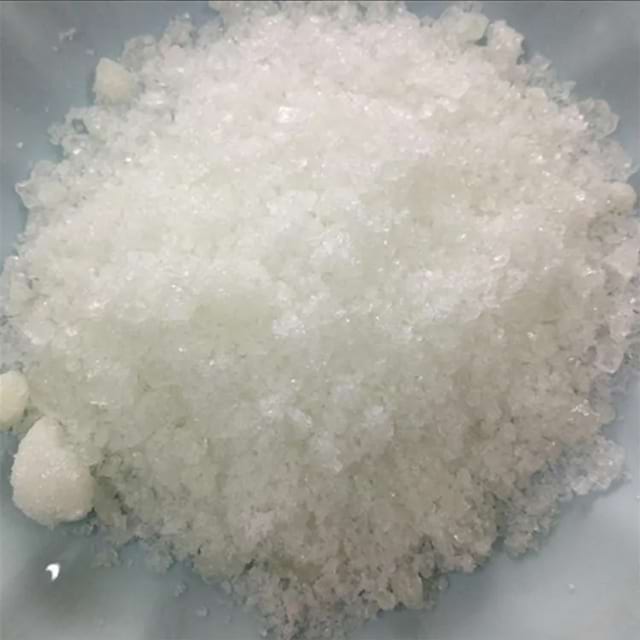
Formulators constantly face the trade-off between extended pot life and rapid cure times when designing high-performance epoxy systems. Balancing latency during production against high reactivity during the curing phase remains a central challenge in polymer chemistry. Engineers need solutions driving manufacturing efficiency without compromising structural performance.
While traditional amines or anhydrides dominate baseline formulations, they often force engineers into strict operational limits. Imidazole offers a unique mechanism to bypass these constraints. It functions as both a highly reactive sole curing agent and a catalytic accelerator. This dual capability transforms how we approach thermal management and cross-linking density in advanced materials.
This guide evaluates the technical realities, implementation risks, and shortlisting criteria for utilizing these compounds in industrial epoxy formulations. You will learn how to select the appropriate derivatives to ensure thermal stability and mechanical integrity. We will explore processing risks, specific applications, and precise formulation logic to optimize your next project.
Key Takeaways
Dual Functionality: Imidazole can be deployed as an accelerator for dicyandiamide/anhydride systems (typically 0.5–2 phr) or as a standalone curing agent (typically 2–6 phr).
Thermal Performance: Specific derivatives (like 2-Phenylimidazole) significantly elevate the glass transition temperature ($T_g$) and chemical resistance, ideal for aerospace and electronics.
The Reactivity Compromise: High catalytic activity drastically reduces pot life and demands stringent thermal management to prevent excessive exothermic reactions.
Selection Logic: Compound selection must be mapped directly to the application environment—balancing viscosity limits, moisture sensitivity, and regulatory handling requirements.
Overcoming the Latency vs. Reactivity Trade-off
The Business Problem
Extended production cycles increase manufacturing costs. Facilities need faster throughput to maintain competitive margins. However, accelerating the cure often sacrifices the structural integrity of the epoxy. Rapid curing shrinks the working window, commonly known as pot life. When pot life drops too low, operators cannot process the resin before it gels. You cannot easily compromise on either metric. Premature gelation ruins expensive batches, while slow curing creates massive production bottlenecks.
The Imidazole Solution
Standard aliphatic amines act predictably through step-growth cross-linking. Unlike these common agents, the Imidazole ring provides a distinct anionic polymerization mechanism. The tertiary nitrogen atom attacks the epoxide ring directly. This initiates an alkoxide anion. The anion then rapidly propagates further epoxide ring openings. This unique chemical pathway differs fundamentally from standard primary amine reactions. It essentially catalyzes the epoxy resin to react with itself.
Outcome
This mechanism delivers rapid cross-linking at elevated temperatures. Simultaneously, the system maintains a workable latency at room temperature. The latency remains highly sensitive but entirely manageable. Formulators can leverage this specific thermal trigger. They optimize both one-component (1K) and two-component (2K) systems effectively. You gain the ability to decouple shelf-life from cure speed. Manufacturers achieve faster demolding times. End-users receive parts exhibiting superior mechanical toughness and thermal resistance.
Categorizing Imidazole Curing Agents and Accelerators
As a Standalone Curing Agent
You can deploy these compounds without any primary curing agents. As standalone hardeners, they drive specific performance outcomes.
Mechanism: They trigger the homopolymerization of the epoxy resin. The initiator molecule bonds to the resin, forcing the epoxy molecules to link into a dense ether network.
Characteristics: This process creates highly cross-linked networks. You achieve excellent heat and chemical resistance. However, it requires elevated curing temperatures. Facilities typically must process these formulations between 80°C and 150°C or higher to achieve full property development.
As a Catalytic Accelerator (Co-curing)
Engineers more commonly use these compounds as secondary additives.
Mechanism: Formulators employ a low-dosage addition to systems cured by dicyandiamide (DICY) or anhydrides. The molecule acts as a true catalyst in these environments.
Characteristics: It lowers the activation energy required for the primary curing agent. This reduction decreases the overall cure time and temperature. Importantly, it accelerates the process without drastically altering the final polymer matrix. You keep the core benefits of the primary hardener while speeding up production.
Common Derivatives Evaluated
The base molecule rarely serves industrial applications perfectly. Chemical modifications yield practical derivatives.
Derivative Name
Physical State (25°C)
Key Advantage
Typical Application
2-Methylimidazole (2-MI)
Solid
Cost-effective, high reactivity
General acceleration, potting
2-Ethyl-4-methylimidazole (2-E4MI)
Liquid
Easier dispersion, lower temp reactivity
Adhesives, filament winding
2-Phenylimidazole (2-PI)
Solid
Superior thermal stability ($T_g$)
Aerospace, PCB laminates
To further understand the dosage impact, review the following performance summary chart:
Usage Mode
Typical phr Range
Effect on Gel Time
Cross-Link Density
Accelerator (DICY/Anhydride)
0.5 – 2.0
Rapid decrease (minutes)
Maintained primary network
Standalone Curing Agent
2.0 – 6.0
Latent at room temp
Extremely dense ether bonds
Key Evaluation Criteria for Formulators
Glass Transition Temperature ($T_g$) Targets
You must assess how different structures impact the thermal ceiling of the cured epoxy. The glass transition temperature dictates structural integrity under heat. Specific derivatives push the $T_g$ significantly higher than aliphatic amines. This metric is essential for PCB laminates and semiconductor packaging. These electronic components endure aggressive thermal cycling during wave soldering. 2-PI, for example, incorporates a bulky phenyl ring. This ring restricts polymer chain mobility. Restricted mobility directly translates to elevated thermal ceilings.
Pot Life & Viscosity Stability
Evaluate the latency profile rigorously. Standard liquid imidazoles severely limit room-temperature pot life. They initiate polymerization almost immediately upon mixing. Modified or encapsulated (latent) versions may be required for 1K systems. Encapsulation traps the reactive core inside a thermoplastic shell. The shell melts only at a specific temperature. This release mechanism protects viscosity stability during transport and storage. You must track viscosity changes using a rheometer to ensure consistent application dynamics.
Mechanical & Chemical Baselines
Formulators need to map out expected mechanical properties. Focus on tensile strength and shear modulus.
Measure the baseline tensile strength to ensure load-bearing capacity.
Test the shear modulus under different temperature gradients.
Evaluate resistance to aggressive solvents like MEK or acetone.
Validate performance against military or aerospace operational environments.
These dense homopolymer networks excel against chemical attacks. They form tight matrices resisting fluid ingress perfectly.
Dosage Sensitivity (phr)
Analyze the narrow tolerance window carefully. phr stands for parts per hundred resin. It represents the weight ratio of the additive relative to 100 parts of base epoxy. Unlike polyamides, these catalysts exhibit extreme dosage sensitivity. Slight over-indexing can lead to brittle matrices. Too much catalyst forces rapid, chaotic cross-linking. Under-indexing results in incomplete cures. An incomplete cure leaves unreacted epoxide groups, compromising the structural integrity completely. Precision dosing remains non-negotiable.
Processing Risks and Implementation Realities
Exothermic Spikes
High concentrations or large mass casts can trigger violent exothermic reactions. The anionic polymerization pathway releases substantial heat. In thick castings, the resin cannot dissipate this thermal energy fast enough. The core temperature spikes uncontrollably. This causes thermal degradation, charring, or internal stress fracturing. Engineers mitigate this by implementing step-curing schedules. You hold the temperature low initially. This allows slow cross-linking. Once the matrix stabilizes, you ramp up the heat to finalize the cure.
Moisture Sensitivity
These compounds are highly hygroscopic. They actively absorb moisture from the surrounding air. Moisture absorption during storage or mixing severely damages the formulation. It acts as a blowing agent during the heat cycle. This can lead to blistering, foaming, and compromised electrical insulation properties in the final product. You must store these materials in tightly sealed containers. Using vacuum degassing during the mixing phase removes entrapped moisture before curing.
Crystallization and Dispersion
Solid derivatives (like 2-PI) require specific mechanical handling. Poor dispersion ruins batch consistency. Un-dissolved particles create localized "hot spots" in the resin. These spots cure rapidly while surrounding areas remain soft. You must employ precise milling or pre-dissolving techniques.
Use a three-roll mill to crush solid particles into the liquid resin evenly.
Pre-dissolve the solid compound in a compatible solvent if the application allows volatiles.
Apply high-shear planetary mixers to guarantee homogeneous distribution throughout the matrix.
Toxicity and Handling
Industrial hygiene must remain a priority. Unmodified versions pose skin and respiratory sensitization risks. They are strong bases and can cause chemical burns. Address these risks directly in your facility. Implement localized exhaust ventilation at mixing stations. Operators require proper personal protective equipment (PPE), including nitrile gloves and respirators. We strongly recommend closed-loop handling protocols. Automating the dosing process removes operators from direct exposure completely.
Application-Specific Shortlisting Logic
Printed Circuit Boards (CCL/PCB) & Electronics
The electronics industry relies heavily on these formulations. When designing Copper Clad Laminates (CCL), prioritize high-purity, latent derivatives. They offer high $T_g$ and strict dielectric properties. Focus on DICY acceleration. DICY provides excellent latency but requires immense heat to activate independently. Adding 0.5 phr of a specific Imidazole accelerator drops the required activation temperature significantly. This protects delicate electronic substrates from thermal damage during lamination.
Advanced Composites (Aerospace/Automotive)
Structural composites demand perfect resin infusion. Look for derivatives balancing resin flow dynamics with rapid hot-press curing times. Out-of-autoclave (OOA) prepregs benefit massively here. The resin must remain liquid enough to wet out carbon fibers thoroughly. Once heated, it must cure instantly to maintain geometric tolerances. Liquid variants ensure easy blending into these composite matrices. They prevent phase separation during long-term prepreg freezer storage.
Adhesives & Coatings
Industrial adhesives require versatility. Favor liquid derivatives (like 2-E4MI) for low-temperature reactivity. Liquids offer ease of blending into 2K epoxy adhesive formulations. Paste adhesives need smooth rheology. Solid hardeners often cause graininess, which weakens bond lines. Liquid accelerators blend seamlessly. They provide aggressive bite on metal and composite substrates. They also improve the chemical resistance of protective tank coatings.
Next Steps for Procurement & R&D
Transitioning to these hardeners requires structured testing.
Define the maximum acceptable exotherm for your specific mold size.
Map the required pot life needed for your manufacturing floor.
Request pilot-scale samples of multiple derivatives.
Run rheology testing to plot viscosity growth over time.
These empirical steps prevent costly manufacturing failures down the line.
Conclusion
Imidazole is not a universally forgiving curing agent, but it remains an indispensable tool for advanced formulators. It grants precise control over cure speed and unlocks high-end thermal performance impossible with standard amines. By leveraging the specific properties of different derivatives, you can tailor your epoxy systems to meet extreme industrial demands.
Success ultimately depends on stringent environmental controls during formulation and highly accurate dosing. Move away from relying purely on theoretical specifications. Execute thorough thermal profiling via DSC to validate the expected pot life and $T_g$ limits in your specific epoxy blend. Implement step-curing protocols for large volume casts, and strictly manage moisture exposure to ensure flawless cross-linking.
FAQ
Q: What is the standard phr (parts per hundred resin) for Imidazole as an accelerator?
A: Typically 0.5 to 2.0 phr when used alongside primary agents like anhydrides or DICY. Exact ratios depend on the specific derivative and desired gel time.
Q: How does Imidazole affect the shelf life of 1K epoxy systems?
A: Unmodified liquid imidazoles will drastically reduce shelf life at room temperature. Formulators must use encapsulated or chemically modified "latent" imidazoles to achieve stable 1K systems.
Q: Can Imidazole be used for room-temperature curing?
A: While it accelerates room-temperature systems, Imidazole generally requires elevated temperatures (heat curing) to achieve full cross-linking and optimal mechanical properties.
Q: What are the primary health and safety concerns when handling Imidazole?
A: It is a strong base and a known irritant/corrosive agent to skin and eyes. Strict adherence to SDS guidelines, including localized exhaust ventilation and proper PPE, is mandatory during formulation.
Nanjing MSN Chemical Co., Ltd. is a professional chemical company specializing in the global distribution of high-quality chemical products. With 20 years of industry expertise, we are committed to providing innovative solutions and reliable services to meet the diverse needs of our clients worldwide.