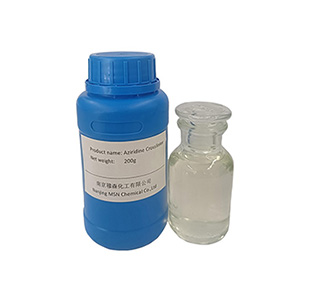
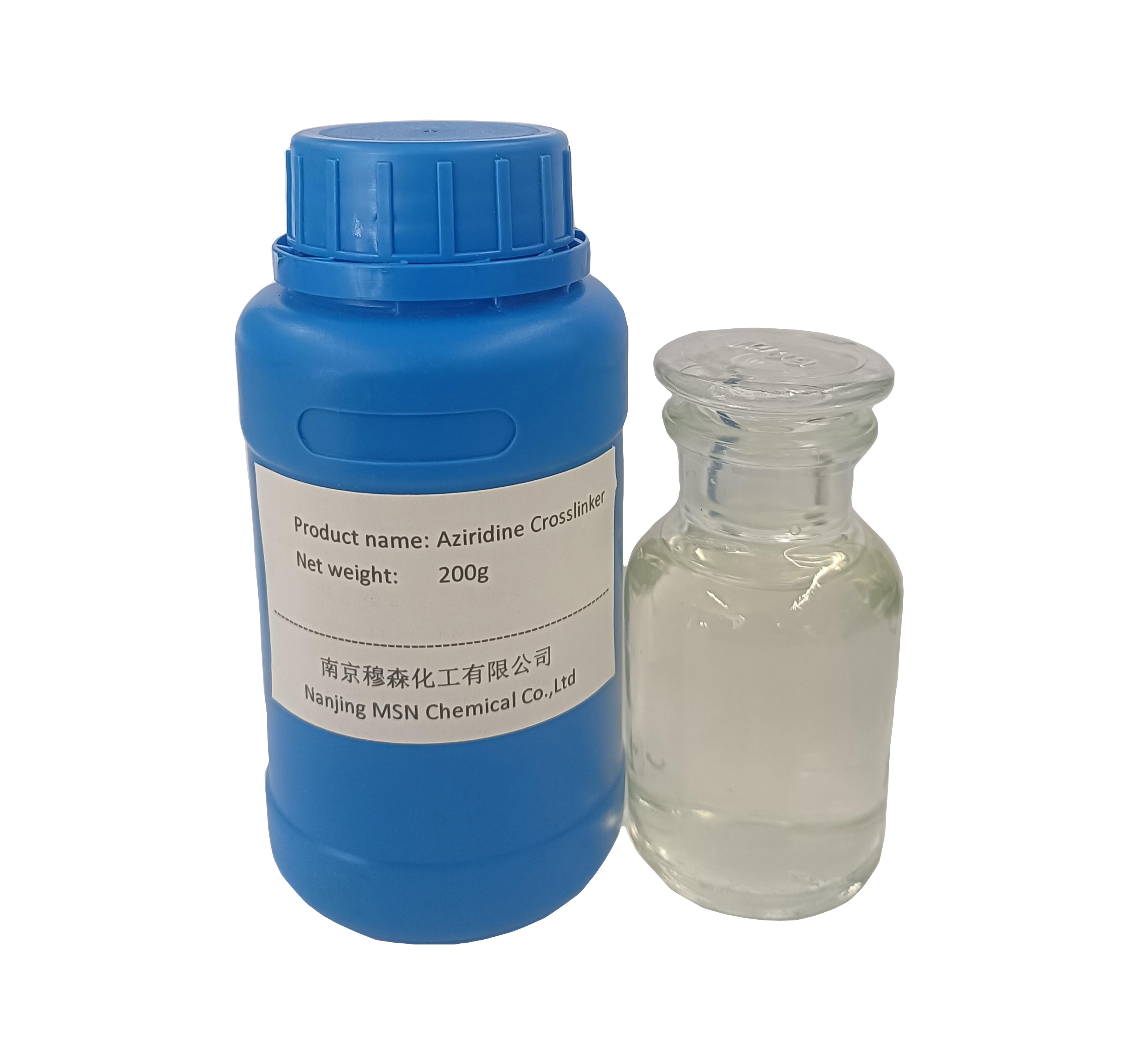
Formulators face a persistent challenge today. Shifting from solvent-borne to water-based coatings often compromises performance. You lose essential water and chemical resistance. This happens because hydrophilic groups remain active inside the dried film. Crosslinking agents step in here. They effectively close the performance gap between water-based and solvent-based systems. Polyfunctional Aziridine Crosslinkers offer a highly effective solution. They cure rapidly at room temperature. They quickly build a strong hydrophobic 3D network. However, you must carefully manage their pot life. Proper handling protocols are also crucial for success. This guide explores their mechanism and performance benefits. You will learn how to implement them safely in your formulations. We provide practical insights for immediate application.
Key Takeaways
Mechanism: Aziridine crosslinkers react rapidly with carboxyl groups in acrylic and polyurethane dispersions (PUDs) to form durable amino-ester linkages.
Performance: Proper dosing (typically 1–3%) significantly increases water rub resistance, chemical resistance, and adhesion to non-porous substrates.
Implementation Trade-off: High reactivity yields fast room-temperature curing but limits pot life (typically 4–48 hours), requiring point-of-use mixing.
Selection: They are the optimal choice for applications requiring low-temperature curing and rapid hardness development compared to carbodiimides or isocyanates.
The Formulation Gap: Why Water-Based Systems Struggle with Moisture
Regulatory pressures continually force manufacturers toward low-VOC formulas. Global standards heavily restrict solvent emissions. This shift solves urgent environmental problems. However, it introduces significant performance sacrifices. Harsh environments expose these structural weaknesses quickly. Water-borne resins require a highly specific chemical design.
Let us examine the resin types more closely. Acrylic dispersions offer excellent weatherability and cost-efficiency. PUDs provide superior toughness and flexibility. Both systems dominate modern eco-friendly paint formulations. They serve industries ranging from wood furniture to automotive interiors. Yet, both rely heavily on the same stabilization mechanism. They use acid-functional monomers. During production, ammonia or amines neutralize these acids. This creates the hydrophilic carboxylate salts necessary for stable water dispersions. They keep the polymer stable in the can.
The true vulnerability appears immediately after application. The water and neutralizing amines evaporate into the atmosphere. The coating film dries on the substrate. Yet, those unreacted carboxyl groups remain active in the polymer backbone. They stay highly sensitive to ambient moisture. When exposed to water, the coating absorbs it readily. You will often see severe swelling. You might notice undesirable blushing or whitening. Sometimes, the film completely loses substrate adhesion. We must neutralize these hydrophilic sites. Doing so restores the durability expected from traditional solvent-borne systems. We cannot achieve premium performance without addressing this fundamental chemical flaw.
The Mechanism: How Aziridine Crosslinkers Lock Out Water
How do we resolve this persistent moisture sensitivity? The answer lies in targeted chemical reactions. Polyfunctional Aziridine Crosslinkers actively seek out carboxyl (COOH) groups. They initiate a rapid ring-opening reaction upon contact. This unique process requires no external heat. It happens entirely at ambient room temperature.
We must understand the functionality of the crosslinker itself. Commercially available aziridines come in various forms. Polyfunctional variants, particularly tri-functional aziridines, offer the highest performance. They contain three reactive rings per molecule. This unique geometry allows a single crosslinker molecule to bind three separate polymer chains. This creates a dense, three-dimensional web. The reaction yields remarkably strong amino-ester bonds. These specific bonds tie the individual polymer chains together tightly. The final result is a densely crosslinked 3D polymer matrix.
This structural change creates a profound hydrophobic shift. Consuming the hydrophilic carboxyl groups removes the water-loving sites entirely. Furthermore, the amino-ester bonds themselves exhibit excellent hydrolytic stability. This inherently reduces the film's overall water absorption capacity. The coating essentially locks out external moisture. Water molecules can no longer penetrate the polymer network.
Industry evidence strongly supports this chemical transformation. Higher crosslink density directly correlates to better empirical test results. You can expect significant improvements in standard laboratory evaluations.
Consider these typical laboratory observations:
MEK double rubs increase drastically after crosslinking.
Water-spot test pass rates jump much higher.
Film hardness develops rapidly within the first 24 hours.
We see a clear, measurable upgrade in overall film integrity.
Best Practice: Always ensure thorough mixing during the initial addition. Uneven distribution leaves unreacted carboxyl pockets behind. These isolated pockets will cause localized water sensitivity and premature coating failure.
Evaluating Performance Outcomes in Water-Based Coatings
Adding an aziridine crosslinker changes the fundamental physical properties of the coating. We map specific chemical reactions to practical, real-world outcomes. You will notice distinct improvements across several key performance areas.
Water Resistance: The tight network physically prevents water whitening. It stops blushing in clear coats. Blistering ceases completely. Wood finishes maintain their pristine, transparent appearance even in humid environments.
Chemical and Solvent Resistance: The highly crosslinked film repels harsh external substances. Household cleaners cannot penetrate the surface. Alcohol spills wipe away harmlessly. Industrial solvents fail to degrade the protective barrier.
Adhesion Enhancement: Formulations anchor much better to difficult substrates. You achieve extremely strong bonds on low-surface-energy materials. Treated metals, glass, and flexible PVC accept the crosslinked coating readily.
Mechanical Toughness: The 3D matrix increases absolute film hardness. It improves mar resistance. Furniture coatings resist scratching much better. Floor finishes withstand heavy foot traffic.
Weathering Resistance: Crosslinking prevents the film from degrading rapidly outdoors. The tight network resists moisture cycling. It handles wet-and-dry transitions without cracking.
We recommend strict standard evaluation criteria for all formulators. You should use established ASTM standards to verify actual performance. Use ASTM D1308 for testing household chemicals and standard water resistance. Use ASTM D5402 to measure solvent resistance via MEK rubs.
Always compare 24-hour results directly against 7-day cure results. This specific comparison reveals the true hardness development curve. It shows exactly when the coating reaches maximum durability.
Common Mistake: Judging final performance after only two hours. Aziridines react very quickly. However, full crosslink density often takes a few days to mature fully. Give the film adequate time before finalizing your lab conclusions.
Implementation Realities: Pot Life, Dosage, and Handling
Successful application requires precise, disciplined control. Dosage optimization is your first crucial step in the lab. Standard evaluation ranges typically fall between 1% and 3%. You base this percentage entirely on total resin solids. Adding more crosslinker is not always better. You hit a strict point of diminishing returns past 3%. Excess crosslinker simply wastes valuable money. It might also cause severe brittleness in the final dried film.
Let us discuss proper mixing techniques. Poor dispersion of the crosslinker causes many common failures. You must use adequate agitation during the addition phase. Avoid dumping the chemical into the vortex all at once. Add it slowly under steady, moderate shear. High-shear mixing generates unwanted heat. Excessive heat drastically reduces your pot life. Low-shear mixing fails to distribute the chemical evenly. You must find the correct mechanical balance. Always pre-dilute the crosslinker with a small amount of water or co-solvent if your formula permits. This simple step improves compatibility. It prevents localized shocking of the polymer emulsion. Shocking causes unwanted coagulation or "seediness" in the wet paint.
Next, consider the daily pot life trade-off. This involves deliberate, proactive risk management on the factory floor. Aziridines possess extremely high reactivity. They cure fast. This limits your active working window significantly. A typical pot life spans only 4 to 24 hours. The exact time depends heavily on system pH and ambient temperature. You must formulate these as two-pack (2K) systems. Point-of-use addition becomes absolutely mandatory. You only mix what you plan to spray or apply immediately.
Safety and compliance require absolute strictness at all times. Unreacted aziridine carries a known toxicity profile. You must adhere to all SDS and TDS guidelines without exception. Handlers must wear appropriate PPE, including nitrile gloves. Proper ventilation is non-negotiable in the chemical mixing area. You must protect your workers from direct exposure. However, the risk diminishes completely after application. Fully cured films are entirely safe. The raw handling phase just requires professional caution and proper training.
Aziridine Crosslinkers vs. Alternative Curing Agents
Formulators have several crosslinker options available today. The industry generally prefers one-pack (1K) systems for their operational simplicity. You open the can and spray. However, extreme performance requirements often mandate two-pack (2K) formulations. Aziridine Crosslinkers fit firmly into the high-performance 2K category. Choosing the right one requires a logical shortlisting process. Let us compare the main alternatives systematically.
Curing Agent
Typical Pot Life
Cure Temperature
Key Advantage
Main Drawback
Aziridine Crosslinkers
4 - 48 Hours
Room Temperature
Fast hardness, high density
Strict handling, short pot life
Carbodiimides
Weeks or Months
Room or Low Heat
Lower toxicity, long pot life
Slower reaction, often needs heat
Water-Dispersible Isocyanates
2 - 8 Hours
Room Temperature
Excellent chemical resistance
Moisture sensitive, CO2 outgassing
Melamine Formaldehyde
Months (1K stable)
High Heat (120°C+)
Extreme hardness, 1K system
Unsuitable for heat-sensitive items
Here is the specific decision logic for your formulations.
Versus Carbodiimides: Carbodiimides occasionally function in 1K systems under highly specific, controlled conditions. They offer a much longer pot life. They possess lower overall toxicity. However, they react much slower in standard conditions. They often require external heat baking to match the crosslink density of aziridines. Choose aziridines when you need rapid room-temperature curing.
Versus Water-Dispersible Isocyanates: Isocyanates pose specific handling challenges in water. They are inherently moisture-sensitive. They react directly with water to create CO2 bubbles. We call this outgassing. Aziridines do not react with the water itself. They only target the available carboxyl groups. This prevents foaming issues during application.
Versus Melamine Formaldehyde: Melamines require high baking temperatures to activate. You must heat them past 120°C. This makes aziridines vastly superior for heat-sensitive substrates. Materials like wood and plastics require the room-temperature cure that aziridines provide. You avoid damaging the substrate entirely.
Conclusion
Aziridine Crosslinkers stand as a proven, high-performance additive. They effectively overcome the inherent water sensitivity found in carboxyl-functional water-based coatings. They build a durable, moisture-resistant matrix rapidly.
Formulators must make a carefully balanced decision. You weigh the need for rapid, room-temperature curing against specific operational constraints. Short pot life and strict safe handling protocols require well-trained production teams. You must establish clear mixing procedures on the floor.
Are you ready to upgrade your water-based formulations? The next step is structured empirical testing. Direct your technical buyers to request a Technical Data Sheet (TDS). Obtain the official safety guidelines immediately. Secure a product sample for lab-scale ladder studies today. Start optimizing your formulations for superior water resistance now.
FAQ
Q: What is the recommended pH level for water-based coatings when adding aziridine crosslinkers?
A: You should constantly maintain an alkaline environment. A pH range of 8.0 to 9.5 works best. This specific alkalinity stabilizes the aziridine molecule. It effectively prevents premature reactions with water. Proper pH control maximizes your operational pot life window.
Q: Can the pot life of an aziridine-crosslinked system be extended?
A: Yes, but only through specific environmental controls. You must maintain a higher system pH. Lowering the ambient temperature also slows the reaction rate significantly. Finally, strictly avoiding premature mixing is essential. Mix only the exact volume you need.
Q: Does adding aziridine affect the clarity of clear coatings?
A: High-quality polyfunctional aziridines generally preserve optical clarity perfectly. They do not cause unwanted yellowing or hazing. When appropriately dosed and thoroughly mixed, they maintain the transparent finish required for premium clear coats and high-end wood sealers.
Q: Are aziridine-crosslinked coatings safe for end-users once cured?
A: Yes, they are entirely safe for end-users. The raw crosslinker requires strict industrial handling and proper PPE. However, the fully reacted polymer network remains highly stable. The completely cured film poses absolutely no risk for its intended end-use applications.
Nanjing MSN Chemical Co., Ltd. is a professional chemical company specializing in the global distribution of high-quality chemical products. With 20 years of industry expertise, we are committed to providing innovative solutions and reliable services to meet the diverse needs of our clients worldwide.