R&D scientists, formulation engineers, and procurement managers need more than a textbook definition. They must evaluate imidazole for commercial scale-up. imidazole (C3H4N2) is a highly polar, 5-membered heterocyclic aromatic organic compound. It contains two non-adjacent nitrogen atoms. Its amphoteric nature and sp2 hybridized nitrogen structure unlock tremendous utility. It serves as a critical pharmaceutical pharmacophore. It operates as a potent industrial catalyst. You will also see it deployed as a highly effective anti-corrosion agent.
This guide breaks down core chemical properties and primary commercial applications. We explore compliance realities and the criteria for evaluating chemical suppliers. Selecting the correct purity grade is vital for product stability. By the end, you will understand exactly how to secure a reliable supply chain and maintain optimal formulation accuracy.
Key Takeaways
Structural Versatility: Imidazole is amphoteric (functions as both acid and base, pKa 14.5 and ~7), making it a highly adaptable building block and biological buffer.
Pharma & Industrial Utility: It is the foundational scaffold for azole-class antifungals and a critical curing agent for epoxy resins and copper corrosion inhibitors.
Handling Risks: Classified under GHS as corrosive (H314) and a reproductive toxin (H360D), requiring strict EHS protocols.
Sourcing Metric: Commercial viability relies on evaluating the Debus-Radziszewski synthesis yield, with pharmaceutical applications demanding >99% purity and strict moisture control due to its hygroscopic nature.
1. Chemical Architecture and Core Physical Properties
To deploy any chemical at scale, formulation teams must first understand its molecular identity. Imidazole forms a planar, 5-membered ring. This ring contains 6 π-electrons. This specific electron configuration classifies the compound as aromatic. It exhibits extremely high polarity. The measured dipole moment sits at 3.67 D. This intense polarity dictates how it interacts inside various solvent matrices.
Understanding baseline physical specifications ensures safe and effective handling. Below is a standard Technical Data Sheet (TDS) matrix outlining its primary attributes.
Physical Property | Standard Specification | Practical Implication |
Appearance | Colorless to pale yellow crystalline solid | Visual purity check during incoming QC. |
Melting Point | 89.5–90.5 °C | Requires heated systems for liquid-phase processing. |
Boiling Point | 257 °C | High boiling point driven by intermolecular hydrogen bonding. |
Aqueous Solubility | 63.3 g/100ml at 20 °C | Extremely soluble in water. Forms stable aqueous solutions. |
Solvent Matrix | Soluble in ethanol, acetone. Sparingly in benzene. | Guides solvent selection for organic synthesis. |
Amphoterism defines its practical reactivity. It functions as both an acid and a base. Its dual nature makes it an exceptionally versatile reagent. As a base, it acts approximately 60 times more basic than pyridine. This elevated basicity controls its behavior in aqueous solutions. It also drives its performance in catalytic environments. Formulation engineers rely on this property to fine-tune reaction pH and stabilize active pharmaceutical ingredients.
2. Commercial Synthesis and Purity Benchmarks
Commercial viability relies on efficient manufacturing pathways. Suppliers must achieve consistent yields while minimizing impurities. The industry relies heavily on established condensation reactions.
The Debus-Radziszewski reaction serves as the standard manufacturing route. This process involves the condensation of three specific components. Manufacturers carefully control temperatures to maximize yield. The primary sequence includes:
Preparing a 1,2-dicarbonyl compound (typically glyoxal).
Introducing a corresponding aldehyde (such as formaldehyde).
Adding ammonia to trigger the condensation reaction.
Applying thermal control to drive the reaction to completion.
Engineers also utilize alternative synthetic pathways for specific derivatives. Imidazoline dehydrogenation offers a reliable niche alternative. Wallach synthesis presents another viable option. Manufacturers choose these alternative routes when producing highly specialized chemical intermediaries.
Evaluating purity grades protects your final formulation. Procurement teams typically choose between two main classifications:
Technical Grade: This grade usually hits 98% purity. It provides sufficient quality for agricultural intermediates. Manufacturers use it heavily in industrial anti-corrosion formulations.
Pharma Grade (>99.0% minimum): This grade undergoes rigorous distillation. Suppliers must implement strict moisture control. Even trace impurities can ruin active pharmaceutical ingredients.
Implementation reality presents distinct handling challenges. The compound is highly hygroscopic. It aggressively pulls moisture from the ambient air. Improper packaging during transit leads directly to caking. Once it cakes, weighing the material becomes difficult. This compromised state destroys formulation accuracy. Buyers must prioritize vendors utilizing robust moisture-barrier packaging.
3. Primary Commercial and Pharmaceutical Applications
The molecular flexibility of this compound bridges multiple industries. It serves life-saving medical functions and heavy-duty industrial processes.
In pharmaceuticals, it acts as an indispensable building block. You can find the core ring naturally in histidine, an essential amino acid. Beyond natural biology, it serves as the core pharmacophore for major medications. Antifungal treatments heavily rely on this structure. Popular drugs like ketoconazole and clotrimazole use the ring to attack fungal cell walls. It also appears in specific antihypertensive and anticancer drugs. The mechanism involves forming high-affinity coordination bonds with metal cations. By binding these metals, it selectively inhibits cytochrome P450 enzymes. This targeted inhibition stops pathogens from replicating.
Industrial formulations and catalysis represent another massive demand sector. When you need a precursor for an advanced imidazole ionic liquid, this baseline molecule is the starting point. Core industrial uses include:
Corrosion Inhibition: It performs exceptionally well in closed-loop water systems. It actively protects copper and other transition metals from oxidative decay.
Polymer & Resin Curing: Manufacturers use it as a rapid accelerator. It functions as a curing agent for epoxy resins. It improves cross-linking density and thermal stability.
Advanced Recycling: Chemical engineers utilize it as an organocatalyst. It effectively drives the depolymerization of PET plastics. This supports circular economy initiatives.
Biological research relies on its precise pH buffering capabilities. Laboratory technicians use it extensively in IMAC (immobilized metal affinity chromatography). It acts as the primary eluent to release His-tagged proteins from nickel columns. It also serves as a highly stable biological buffer within the pH 6.2–7.8 range.
4. Safety, Handling, and EHS Compliance
We cannot downplay the risks associated with this chemical. Operations managers must enforce strict Environmental, Health, and Safety (EHS) compliance. The Globally Harmonized System (GHS) classifies it as a hazardous substance. Below is a summary chart outlining the primary GHS hazard classifications.
GHS Code | Hazard Statement | Practical Risk and First Aid Consideration |
H302 | Harmful if swallowed | Rat LD50 ~960 mg/kg. Induce vomiting only under medical guidance. |
H314 | Causes severe skin burns and eye damage | Immediate tissue destruction. Requires immediate flushing with water. |
H360D | May damage the unborn child | Reproductive toxicity. Pregnant personnel must avoid all exposure. |
Proper storage prevents catastrophic workplace accidents. Facilities must isolate the material from strong acids and strong oxidizers. Mixing these chemicals causes violent exothermic reactions. Dust control remains an absolute priority. Fine chemical dust can present a severe explosion hazard if suspended in the air. Warehouses should utilize anti-static equipment. Facilities must maintain cool, dry, and well-ventilated environments.
Handling realities demand stringent personal protective equipment (PPE). Operators should never handle the raw powder without protection. Safety protocols mandate local exhaust ventilation at all weighing and mixing stations. Personnel must wear heavy-duty nitrile gloves. Splash goggles are non-negotiable. When handling bulk powders, respiratory protection (such as N95 or P100 masks) prevents accidental inhalation.
5. Procurement Framework: Vendor Evaluation Criteria
Selecting a reliable chemical supplier dictates your production success. Procurement managers must evaluate vendors across four critical pillars. A poor sourcing decision directly impacts product yield and safety.
First, assess supply chain stability. You must determine if the vendor is a primary manufacturer. Primary manufacturers utilize domestic synthesis to control the entire process. Conversely, some vendors operate merely as distributors. Distributors often rely on imported intermediaries. This reliance can cause unexpected lead-time delays. Partnering with a primary manufacturer generally guarantees better volume consistency.
Second, demand strict documentation verification. Never purchase industrial chemicals without an up-to-date Certificate of Analysis (CoA). You must also review the Technical Data Sheet (TDS) and Material Safety Data Sheet (MSDS). When synthesizing an imidazole derivative, base material consistency is everything. Look for batch-to-batch consistency in the melting point. Additionally, verify moisture content using Karl Fischer titration data.
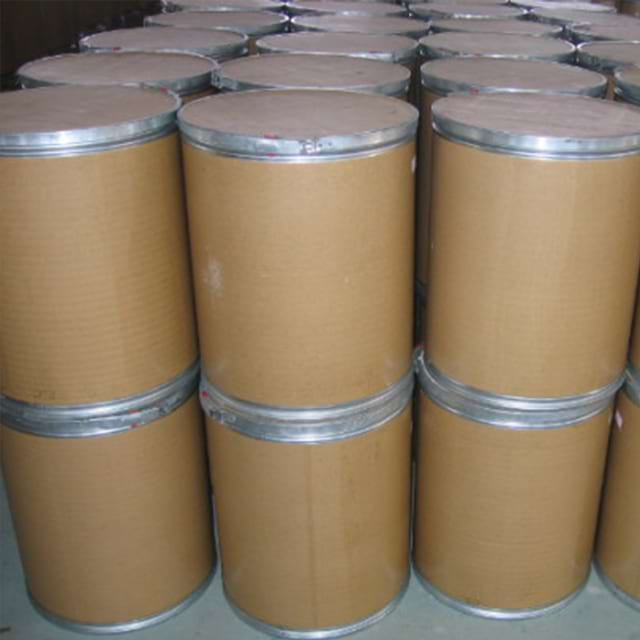
Third, evaluate packaging specifications. This compound is fiercely hygroscopic. Standard paper bags will fail. You must evaluate moisture-barrier packaging. For industrial-scale orders, ensure the vendor uses robust fiber drums. Some suppliers offer UN-rated Intermediate Bulk Containers (IBCs). These containers must feature intact polyethylene liners. They should also include integrated desiccant systems to prevent moisture ingress during transit.
Finally, confirm regulatory support. Industrial applications may only require ISO certifications. Pharmaceutical applications demand much more. You must verify Drug Master File (DMF) availability. The manufacturing facility must also demonstrate full Good Manufacturing Practice (GMP) compliance. Regulatory gaps will halt your product commercialization immediately.
Conclusion
This compound possesses a unique dual identity. It acts as a hazardous substance while remaining an essential chemical component. It successfully bridges the gap between life-saving pharmaceuticals and heavy-duty industrial polymers.
To successfully deploy this chemical, follow these actionable next steps:
Always select a purity grade matched exactly to your end-use requirements.
Implement strict moisture controls from receiving dock to formulation tank.
Enforce rigorous GHS safety protocols and mandate appropriate PPE for all operators.
Audit your primary suppliers for consistent Karl Fischer titration results and robust packaging.
Action is required to secure your supply chain. We recommend directing your formulation engineers and procurement teams to download updated technical data sheets. Request an evaluation sample for your R&D lab today. Contact our chemical engineering support team for dedicated scale-up consulting.
FAQ
Q: What is the difference between imidazole and imidazoline?
A: Imidazoline is the partially reduced, saturated analog of imidazole. It lacks full aromaticity because it does not possess the complete conjugated pi-electron system. Manufacturers must perform specific dehydrogenation reactions to convert imidazoline back into the fully aromatic ring structure.
Q: Is imidazole acidic or basic in water?
A: Aqueous solutions of this chemical are slightly alkaline. This occurs because its basicity (pKa ~14.5 for the deprotonated state) significantly overpowers its weak acidity. The conjugate acid has a pKa of approximately 7, allowing it to function as a versatile biological buffer.
Q: How does imidazole function in epoxy resins?
A: It acts as a highly efficient accelerator and curing agent. When added to the resin mixture, it triggers rapid polymerization. This action significantly improves the cross-linking density, resulting in enhanced mechanical strength and superior thermal stability for the final polymer.
Q: What is the shelf life of commercial imidazole?
A: The typical commercial shelf life ranges between 12 and 24 months. To achieve this longevity, you must store it in tightly sealed, moisture-proof containers. The storage environment must remain cool, dry, and well-ventilated to prevent hygroscopic caking.


