1. Introduction
Imagine a polymer that can adapt to temperature changes, pH shifts, and even light—instantly. N-Vinylcaprolactam (NVCL) is redefining what responsive polymers can do. Traditional temperature-sensitive materials, like PNIPAM, face limitations that NVCL overcomes.
In this article, we will explore the unique properties of NVCL, its innovative applications in biomedicine, smart materials, and environmental monitoring. Get ready to discover how NVCL is changing the game for responsive polymer design.
2. Basic Characteristics of NVCL and Temperature Response Mechanism
2.1 Molecular Structure and Properties of NVCL
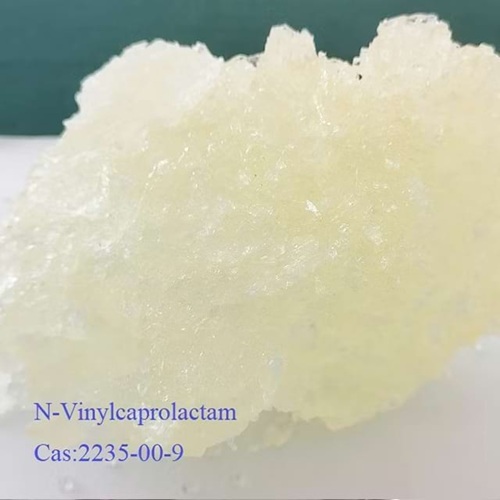
N-Vinylcaprolactam (NVCL) is a temperature-responsive polymer known for its unique chemical structure and properties. Unlike traditional temperature-sensitive polymers like PNIPAM (Poly(N-isopropylacrylamide)), NVCL exhibits significant advantages in its phase transition behavior. NVCL is characterized by its Lower Critical Solution Temperature (LCST), a key property that defines its temperature responsiveness.
At a specific temperature (around 33°C), NVCL undergoes a drastic phase transition, switching from a hydrophilic to a hydrophobic state. This transition is essential in many biomedical and industrial applications, such as controlled drug release and temperature-sensitive coatings.
Unlike PNIPAM, NVCL is biocompatible and does not produce harmful degradation products, making it a safer option for medical applications. Its cyclic structure (caprolactam group) gives it amphiphilic properties, meaning it interacts well with both hydrophobic and hydrophilic environments. This makes it more versatile than other common thermoresponsive polymers.
2.2 Temperature Response Mechanism of NVCL
NVCL’s temperature response mechanism is centered on the volume phase transition (VPT). When the polymer is in an aqueous solution, it exists in a solvated, swollen state below its LCST. As the temperature increases past the LCST, NVCL undergoes a volume reduction, transitioning from a swollen, hydrophilic state to a contracted, hydrophobic one. This transition is reversible, meaning NVCL can return to its initial swollen state once the temperature drops below the LCST again.
The ability to tune the LCST of NVCL is one of its most remarkable features. By copolymerizing NVCL with other monomers, such as N-vinylpyrrolidone or N-vinylacetamide, the LCST can be precisely adjusted. This tunability allows NVCL to be customized for specific applications, making it an ideal material for smart devices that require temperature-sensitive responses.
2.3 Comparison with Traditional Temperature-Responsive Polymers
When comparing NVCL to other widely used temperature-sensitive polymers like PNIPAM, several advantages become clear. Firstly, PNIPAM has an LCST that is typically around 32°C, but it is prone to toxicity issues in biological systems. In contrast, NVCL is biocompatible, ensuring it is safer for medical and pharmaceutical uses. Additionally, NVCL has a much broader LCST range, and its transition can be precisely controlled by altering the polymerization conditions, giving it a significant edge in versatility.
Property | NVCL | PNIPAM |
LCST | 33°C to 80°C (tunable) | ~32°C |
Biocompatibility | High | Moderate (potential toxicity) |
Temperature Range | Adjustable | Fixed at ~32°C |
Usage | Drug delivery, coatings, etc. | Drug delivery, tissue engineering |
Degradation Products | Non-toxic | Potentially toxic |
3. Multiresponsive NVCL: Design Beyond Temperature Sensitivity
3.1 Multiresponsive Mechanisms of NVCL
NVCL is not just limited to temperature responsiveness. It can be combined with other stimuli-responsive elements such as pH, light, and electric fields to create multiresponsive systems. This makes NVCL a highly adaptable polymer for various applications in which multiple environmental conditions need to be monitored or controlled.
For example, by incorporating pH-sensitive groups like carboxylic acids or amines, NVCL can change its state based on the acidity or alkalinity of the surrounding environment. This behavior is particularly useful in drug delivery systems where both temperature and pH play critical roles in controlling drug release at the targeted site.
3.2 NVCL in Composite Materials
To enhance NVCL's properties, it can be composite with nanomaterials such as metal nanoparticles or carbon nanotubes. These composites improve the mechanical properties of NVCL, such as tensile strength and durability, while also enhancing its thermal stability.
The incorporation of nanomaterials can also improve environmental adaptability. NVCL-based composites are designed to perform well even under harsh conditions, such as high temperature, humidity, or acidic environments. This makes NVCL composites suitable for applications like environmental monitoring, where materials must withstand fluctuating environmental conditions.
3.3 NVCL in Smart Materials
One of the most promising applications of NVCL is in the field of smart materials, particularly smart coatings and sensors. NVCL's multiresponsive capabilities allow it to react to multiple environmental stimuli, such as temperature, pH, and light, making it ideal for coatings that change properties in response to environmental factors.
In environmental monitoring and pollution control, NVCL-based smart materials can be used to develop systems that detect and respond to pollutants. NVCL’s ability to change its physical properties in response to stimuli makes it a strong candidate for smart water treatment technologies, where it can adapt its structure to capture and remove contaminants.
Application | NVCL Composite Materials | Traditional Materials |
Smart Coatings | High adaptability to multiple stimuli | Fixed properties, limited adaptability |
Environmental Sensors | Real-time response to environmental changes | Limited to single stimulus (e.g., temperature) |
Water Treatment | Can respond to multiple pollutants | Single or no response to pollutants |
4. Synthesis and Challenges of NVCL
4.1 Synthesis Methods of NVCL
The synthesis of NVCL can be achieved through several methods, including radical polymerization, radiation polymerization, and photopolymerization. Each method has distinct advantages in terms of control over molecular weight, crosslinking, and polymerization rates.
Radical polymerization is the most commonly used method for producing NVCL, as it allows for good control over the polymerization process, yielding high molecular weight polymers with excellent temperature response. Radiation polymerization uses high-energy radiation to initiate the polymerization process and is ideal for creating large quantities of NVCL for industrial applications. Photopolymerization utilizes light to trigger the polymerization process, making it suitable for precision applications such as coatings and microfabrication.
4.2 Optimization of NVCL Polymers
To enhance the properties of NVCL, polymerization techniques can be further optimized through copolymerization, crosslinking, and surface modification. Copolymerizing NVCL with other monomers like vinylpyrrolidone allows for tuning the polymer’s responsiveness. Crosslinking NVCL results in a network structure that improves the mechanical stability, while surface modification can increase biocompatibility for medical applications.
4.3 Challenges in Industrial Scaling
Scaling the production of NVCL-based materials comes with several challenges. Cost control is a major concern, as the production of high-quality NVCL can be expensive, especially when using sophisticated polymerization methods. Additionally, scalability can be an issue, as precise control over molecular weight and polymerization conditions is harder to maintain during large-scale production.
5. Biomedical Applications of NVCL: Drug Delivery and Tissue Engineering
5.1 Thermally Triggered Drug Release Systems
One of the most exciting biomedical applications of NVCL is its use in drug delivery systems. NVCL can be engineered to release drugs in response to temperature fluctuations, making it ideal for thermally triggered drug release. These systems ensure that drugs are released only when needed, improving the efficacy of the treatment and minimizing side effects.
Moreover, dual-responsive systems that combine NVCL with other stimuli-responsive polymers (e.g., PVA, PNIPAM) have been developed to respond to both temperature and pH changes. This approach allows for precise control of drug release in response to the physiological environment.
5.2 Tissue Engineering and Regenerative Medicine
NVCL has significant potential in tissue engineering due to its biocompatibility and ability to create responsive scaffolds. These scaffolds can be designed to mimic the natural extracellular matrix, promoting cell growth and tissue regeneration. NVCL-based scaffolds have been successfully used in the repair of both soft and hard tissues, with promising results in terms of cell viability and tissue formation.
5.3 Antibacterial and Antiviral Applications
NVCL-based materials are also being explored for their antibacterial and antiviral properties. When combined with antimicrobial agents like silver nanoparticles, NVCL can create effective antibacterial drug delivery systems. Furthermore, NVCL's application in antiviral drug delivery is promising, especially in the development of surface coatings and films that prevent the spread of viral infections.
Application | NVCL in Biomedical Applications | Traditional Materials |
Drug Delivery | Thermally triggered, dual-response | Single-responsive, limited control |
Tissue Engineering | Biocompatible scaffolds for tissue regeneration | Limited adaptability for tissue repair |
Antimicrobial Systems | Antibacterial, antiviral systems | Less effective against a broad range of pathogens |
6. Environmental and Industrial Applications of NVCL
6.1 Environmental Monitoring and Pollution Control
NVCL's multiresponsive nature makes it an excellent candidate for environmental monitoring and pollution control. NVCL-based composites can be used to create smart sensors that respond to environmental changes, such as pollutants in water or air. These sensors can provide real-time data, allowing for more effective pollution management.
In water treatment, NVCL composites can adapt their structure to absorb contaminants, making the process more efficient and sustainable.
6.2 Smart Packaging and Self-Healing Materials
NVCL’s potential in smart packaging is another exciting application. By integrating NVCL into food packaging, it can offer self-healing capabilities, which can repair minor damage automatically when exposed to specific environmental stimuli. Similarly, self-healing materials made from NVCL polymers can be used in various industrial applications, such as in coatings and electronic devices.
7. Conclusion
N-Vinylcaprolactam (NVCL) is revolutionizing responsive polymer design with its temperature and multiresponsive capabilities. It overcomes the limitations of traditional polymers like PNIPAM, offering enhanced versatility. Nanjing MSN Chemical Co., Ltd. provides NVCL-based products that deliver high adaptability for industries like biomedicine and environmental monitoring. Despite challenges in scaling production, NVCL's future looks promising with ongoing advancements and applications.
FAQ
Q: What is N-Vinylcaprolactam (NVCL)?
A: N-Vinylcaprolactam (NVCL) is a temperature-responsive polymer with unique multiresponsive properties, commonly used in various applications like drug delivery and smart materials.
Q: How does N-Vinylcaprolactam (NVCL) differ from traditional polymers?
A: Unlike traditional polymers, NVCL offers tunable temperature sensitivity and the ability to respond to multiple stimuli, such as pH, light, and electric fields, making it more versatile.
Q: What are the main applications of N-Vinylcaprolactam (NVCL)?
A: N-Vinylcaprolactam (NVCL) is widely used in drug delivery systems, environmental monitoring, and smart materials like coatings and sensors due to its unique responsive properties.
Q: Why is N-Vinylcaprolactam (NVCL) important in responsive polymer design?
A: N-Vinylcaprolactam (NVCL) expands the potential of responsive polymers, offering both temperature sensitivity and additional tunable properties, enabling innovations in biomedicine and environmental applications.
Q: Can N-Vinylcaprolactam (NVCL) be used in biomedical applications?
A: Yes, N-Vinylcaprolactam (NVCL) is highly biocompatible and ideal for use in drug delivery, tissue engineering, and antimicrobial applications. It offers controlled release based on temperature and other stimuli.


