Introduction
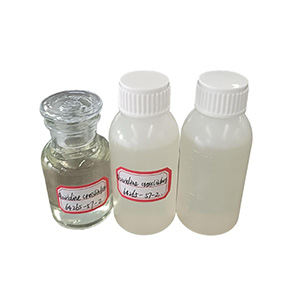
Aziridine crosslinkers play a crucial role in enhancing the performance of polymers. However, improper use can lead to serious issues.
In this article, we will discuss common pitfalls manufacturers face when using aziridine crosslinkers. You will learn how to avoid these mistakes and improve your formulations.
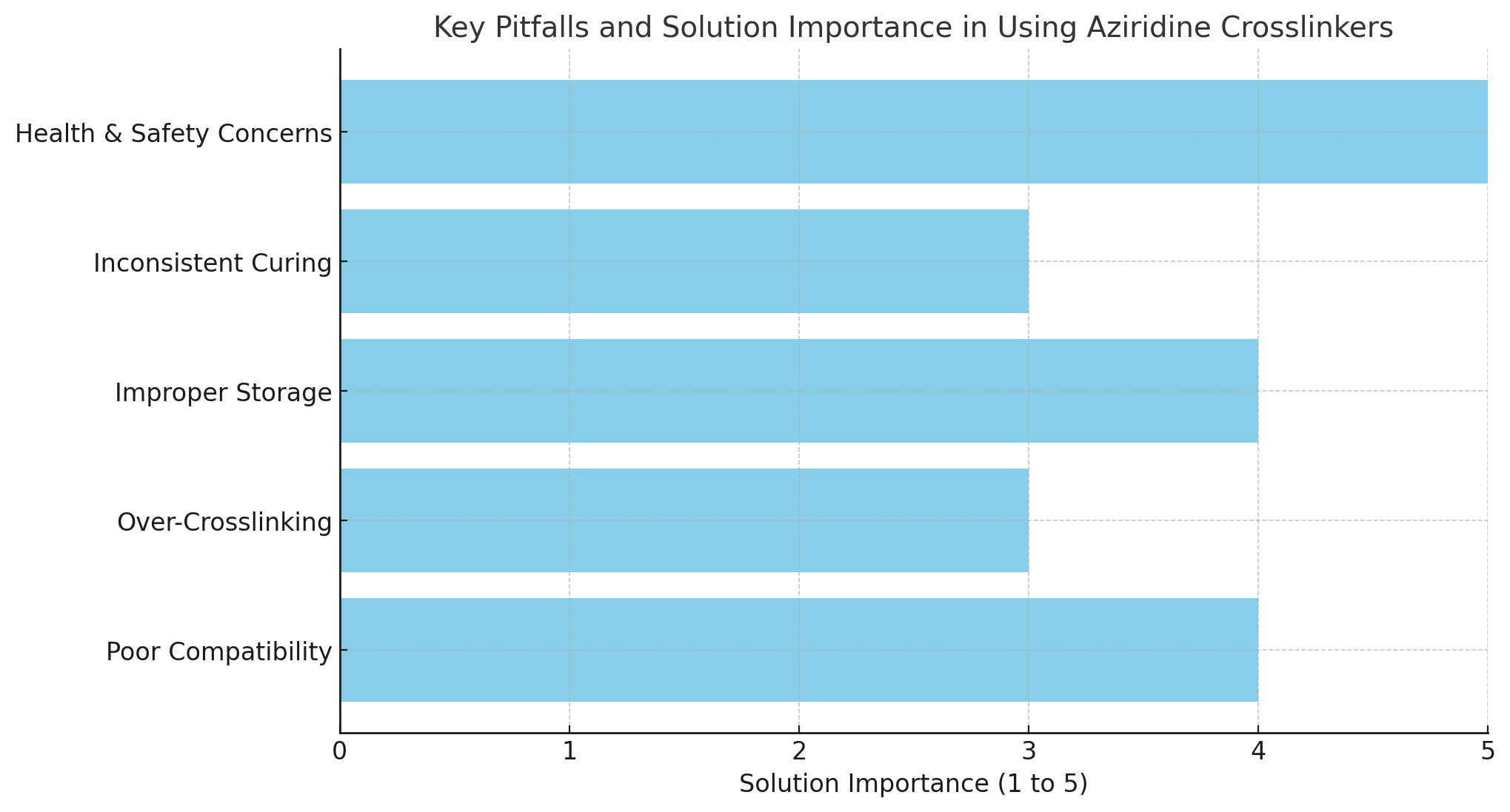
Poor Compatibility with Resin Systems
Understanding Resin-Activator Compatibility
Why It Happens: Incompatible resin systems and aziridine crosslinkers often lead to poor curing, which can negatively affect adhesion and the overall performance of the polymer. Different resins have varying reactivity profiles, and a crosslinker that works well with one may not perform optimally with another. For example, some aziridine crosslinkers may not bond well with certain types of acrylic or epoxy resins, leading to weaker product integrity.
How to Fix It: It is essential to test compatibility before large-scale production. Ensure that the aziridine crosslinker chosen aligns with the resin system’s requirements. Some aziridine crosslinkers are designed specifically for certain types of resins, so selecting the right one can improve performance. You can also perform small batch testing to confirm compatibility before full-scale manufacturing.
Effect on Performance and Durability
Impacts: Poor compatibility can cause significant degradation in product performance. For example, the polymer may show reduced chemical resistance, lower impact strength, and decreased shelf life. This can be especially concerning in industries that require high-performance materials, such as aerospace and automotive manufacturing.
Solution: When poor compatibility is detected, consider switching to a more compatible aziridine crosslinker. Additionally, stabilizers or additives that enhance resin-crosslinker compatibility can also be used to improve performance.
Tip: Always perform compatibility tests with resin systems and aziridine crosslinkers in small batches to prevent large-scale production issues.
| Resin Type | Compatible Aziridine Crosslinker | Curing Time | Performance Impact |
| Epoxy Resin | Aziridine Crosslinker A | 30 minutes | Improved adhesion and chemical resistance |
| Polyurethane Resin | Aziridine Crosslinker B | 45 minutes | Enhanced durability and flexibility |
| Acrylic Resin | Aziridine Crosslinker C | 20 minutes | Good curing, moderate adhesion |
Over-Crosslinking Leading to Brittleness
Signs of Over-Crosslinking
Why It Happens: Over-crosslinking occurs when excessive amounts of aziridine crosslinker are added, leading to the formation of a rigid, brittle polymer. While crosslinking increases strength and stability, too much can compromise flexibility and toughness, making the product prone to cracking under stress. This issue is often a result of poor formulation control or a misunderstanding of optimal crosslinking levels.
How to Fix It: To avoid over-crosslinking, it is important to optimize the amount of aziridine crosslinker used. For most applications, a moderate level of crosslinking should be sufficient to achieve the desired mechanical properties. It may be helpful to work with a crosslinker with a more controlled reactivity or use an additive to regulate the reaction.
Testing for Ideal Crosslinking Levels
Solution: Testing for ideal crosslinking levels can be done by adjusting the curing conditions or the concentration of aziridine crosslinker in the formulation. Conducting tensile tests and evaluating the impact resistance of different formulations can help determine the optimal balance between strength and flexibility.
Regular testing of mechanical properties during product development can help identify when over-crosslinking starts to compromise material flexibility.
Degradation Due to Improper Storage
Understanding the Impact of Storage Conditions
Why It Happens: Aziridine crosslinkers are sensitive to environmental factors such as heat, humidity, and exposure to sunlight. Improper storage conditions can cause degradation, leading to reduced shelf life and compromised performance. For instance, high temperatures can accelerate the reaction, causing premature crosslinking, while humidity can reduce the effectiveness of the crosslinker.
How to Fix It: To prevent degradation, aziridine crosslinkers should be stored in cool, dry, and dark conditions. Manufacturers should also ensure that containers are tightly sealed to prevent exposure to air and moisture. It is also advisable to keep the crosslinker in a temperature-controlled environment.
Stability Enhancements
Solution: To improve the stability of aziridine crosslinkers, formulators can incorporate stabilizing agents. For example, adding small amounts of alcohol-based stabilizers or specific amines can extend the shelf life of the crosslinker, ensuring it remains effective for longer periods.
Inconsistent Curing Times
Variability in Curing Time Across Different Formulations
Why It Happens: Inconsistent curing times can occur due to formulation inconsistencies, such as variations in crosslinker concentration or the presence of impurities. Environmental factors like temperature and humidity can also influence curing rates. This inconsistency is a major issue for manufacturers who need precise curing times to optimize production efficiency.
How to Fix It: The first step in fixing inconsistent curing times is to standardize formulation processes. Consistent raw material quality and proper control over environmental factors are key. Additionally, formulating with aziridine crosslinkers that are more stable and predictable in curing can minimize variability.
Adjusting Formulations to Achieve Consistency
Solution: To achieve more consistent curing times, adjust the curing agents used in the formulation. Formulators can also opt for aziridine crosslinkers that provide more predictable curing behavior, such as those designed for specific resin systems or that have controlled reactivity.
Health and Safety Concerns
Toxicity and Environmental Risks
Why It Happens: Many traditional aziridine crosslinkers contain reactive components that pose health and environmental risks. Some aziridine compounds are considered mutagenic and carcinogenic, creating safety concerns during manufacturing and use. Additionally, these crosslinkers can release toxic fumes during curing or degradation.
How to Fix It: Safer alternatives to traditional aziridine crosslinkers are available, such as low-toxicity options like NeoAdd® PAX. These alternatives provide similar performance characteristics but with significantly reduced health risks for workers and the environment.
Regulatory Compliance and Best Practices
Solution: Manufacturers should prioritize compliance with safety regulations and adopt safer crosslinkers that do not pose significant health risks. Using low-toxicity aziridine crosslinkers ensures not only better safety but also a more sustainable production process.
Adopt best practices in crosslinker selection to ensure your formulations meet safety and environmental regulations, protecting both workers and consumers.
Conclusion
This article addresses common issues when using aziridine crosslinkers, such as compatibility with resin systems, over-crosslinking, and inconsistent curing times. By following the provided solutions, formulators can enhance performance and ensure safety.
Choosing the right aziridine crosslinker is crucial for product quality. Proper handling, storage, and health compliance will help avoid these pitfalls. Companies like MSN Chemical offer safer and more effective crosslinker options that improve both safety and performance.
FAQ
Q: What is an aziridine crosslinker?
A: An aziridine crosslinker is a reactive chemical used to enhance polymer properties like adhesion, durability, and chemical resistance by forming covalent bonds between polymer chains.
Q: Why is compatibility important when using an aziridine crosslinker?
A: Incompatible aziridine crosslinkers with resin systems can lead to poor curing and adhesion, negatively impacting product performance.
Q: How can over-crosslinking affect the final product?
A: Over-crosslinking with an aziridine crosslinker can cause brittleness and reduced flexibility in the final product, affecting its durability.
Q: How do improper storage conditions affect aziridine crosslinkers?
A: Storing aziridine crosslinkers in high temperatures or humid conditions can degrade their effectiveness and reduce shelf life.
Q: What safety concerns should be considered with aziridine crosslinkers?
A: Aziridine crosslinkers can be toxic, and their mutagenic properties pose health risks, making safety and proper handling essential.


