Introduction
Aziridine crosslinkers are crucial in enhancing the performance of coatings and adhesives. But how do you choose the right one?
In this article, we’ll explore the key factors to consider when selecting an aziridine crosslinker. You'll learn about their role in improving adhesion, durability, and curing efficiency.
Key Characteristics of Aziridine Crosslinkers
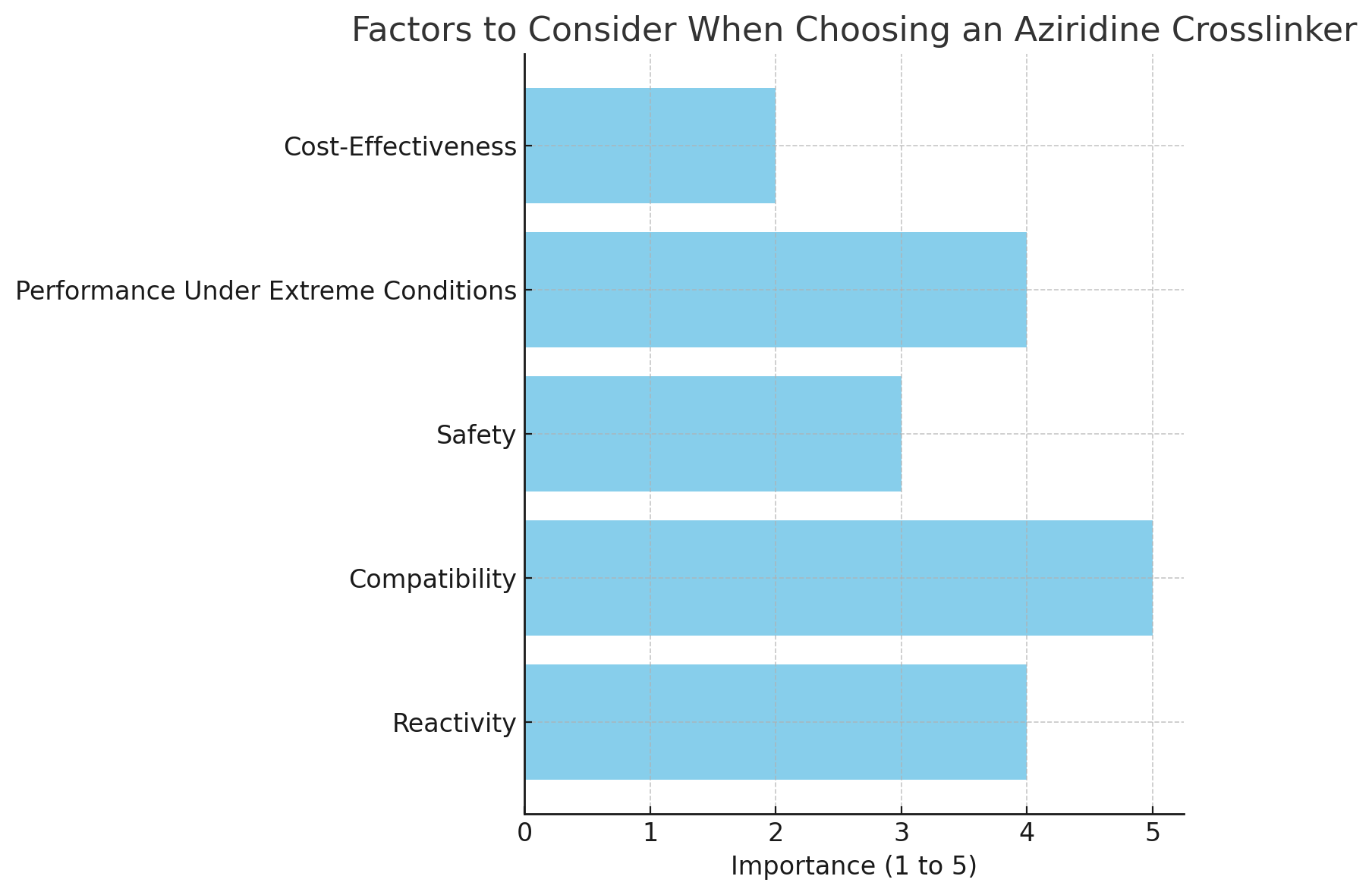
Reactivity and Crosslinking Efficiency
The reactivity of an aziridine crosslinker determines how quickly it can form bonds with polymer chains. This reactivity is crucial for controlling curing times, as faster reactions can reduce production time and improve efficiency. Aziridine crosslinkers typically provide excellent crosslinking efficiency, even at low concentrations, which means they can deliver high-performance properties without requiring large amounts of the chemical.
The speed and efficiency of crosslinking will depend on the specific formulation and curing conditions, such as temperature and humidity. Some aziridine crosslinkers are designed to work well at room temperature, which makes them highly suitable for time-sensitive applications where rapid curing is needed.
Compatibility with Different Polymer Types
Aziridine crosslinkers are known for their versatility and compatibility with a wide range of polymers. This includes common resins like polyurethanes, epoxies, acrylics, and vinyls. Each polymer system has its unique properties, and the choice of crosslinker can significantly affect the final product’s adhesion strength, flexibility, and durability.
When selecting an aziridine crosslinker, it’s essential to consider the resin system in use. Some crosslinkers are more compatible with certain types of polymers, improving the overall performance. For instance, aziridine crosslinkers may be particularly effective with polyurethanes in automotive coatings due to their ability to form strong, durable bonds with various substrates.
Safety and Environmental Impact
The safety and environmental impact of aziridine crosslinkers are crucial considerations. Many traditional crosslinkers, including some isocyanates, are associated with health and safety risks, such as toxicity or mutagenicity. Aziridine crosslinkers, on the other hand, offer a safer alternative with lower toxicity levels, making them more suitable for use in applications where safety is a primary concern, such as food packaging and medical adhesives.
Additionally, aziridine crosslinkers often meet stringent environmental regulations, as they tend to break down more easily than other chemicals and produce fewer harmful byproducts. This environmental friendliness is becoming increasingly important as industries strive to meet sustainability goals and reduce their ecological footprint.
Factors Affecting the Choice of Aziridine Crosslinker
Application-Specific Requirements
Different applications require different characteristics from crosslinkers. In automotive coatings, for example, a crosslinker needs to provide strong adhesion to metal and plastic surfaces, as well as resistance to environmental stress factors like UV light and moisture. In aerospace, adhesives must withstand extreme temperatures, making curing time and high-temperature resistance important factors when selecting an aziridine crosslinker.
For packaging materials, a low-toxicity crosslinker that complies with food safety regulations is essential, while industrial coatings often need crosslinkers that can withstand abrasion and harsh chemicals. Understanding these specific requirements is key to selecting the right aziridine crosslinker for each application.
Cost-Effectiveness and Availability
While aziridine crosslinkers often offer superior performance compared to traditional hardeners, they can sometimes be more expensive. However, the higher cost may be justified by the performance benefits, such as reduced curing times, better adhesion, and longer-lasting durability, which ultimately reduce manufacturing costs in the long run.
In addition to cost, the availability of aziridine crosslinkers in the market is another important factor. Manufacturers should ensure that the crosslinker they choose is readily available and compatible with their existing production processes. Sourcing from reliable suppliers can also ensure consistent quality and minimize supply chain disruptions.
Performance under Extreme Conditions
Aziridine crosslinkers are known for their performance under extreme conditions, including high and low temperatures, humidity, and exposure to UV radiation. For example, aziridine crosslinkers used in aerospace adhesives must maintain their integrity at temperatures exceeding 200°C, while automotive coatings may need to endure exposure to both high temperatures and UV radiation.
Evaluating the performance of different aziridine crosslinkers under these extreme conditions is crucial to ensure they meet the requirements of your specific application. Some crosslinkers are specially formulated for use in extreme environments, offering enhanced heat resistance and stability over time.
Application Areas for Aziridine Crosslinkers
Automotive Coatings
Aziridine crosslinkers play a critical role in automotive coatings by improving adhesion to metal and plastic substrates, enhancing durability, and providing resistance to environmental factors like UV light and corrosion. These crosslinkers are particularly valuable in high-performance coatings, such as those used for vehicle exteriors, as they ensure long-lasting protection and a high-quality finish.
Aerospace Adhesives
In aerospace applications, aziridine crosslinkers are highly valued for their ability to maintain strong adhesion under extreme conditions, including high temperatures and mechanical stress. They are essential in creating adhesives that can withstand the demands of the aerospace industry, where safety and durability are paramount.
Packaging and Coatings for Food Contact
Aziridine crosslinkers are increasingly used in food packaging due to their low toxicity and compliance with food safety regulations. These crosslinkers enhance the durability of packaging materials, improving their resistance to moisture and environmental factors while maintaining safety for food contact.
Industrial Equipment and Machinery Coatings
Industrial coatings often require high abrasion resistance and protection against harsh chemicals. Aziridine crosslinkers are ideal for these applications, as they improve the mechanical strength of coatings and extend the lifespan of industrial equipment by providing a more durable protective layer.
How to Evaluate Aziridine Crosslinkers
Testing for Adhesion Strength and Durability
Testing the adhesion strength and durability of coatings and adhesives using aziridine crosslinkers is essential for ensuring that they will perform well under real-world conditions. Common tests include peel strength, shear adhesion, and impact resistance. These tests help determine how well the crosslinked film bonds to different substrates and its ability to maintain that bond over time.
Determining Curing Time and Temperature Requirements
Evaluating curing time and temperature sensitivity is crucial when choosing an aziridine crosslinker. Some formulations may require low-temperature curing for energy efficiency, while others may need faster curing times to improve productivity. Manufacturers should test how the crosslinker performs under different curing conditions to determine the most suitable option for their production process.
Ensuring Compatibility with Resin Systems
Testing compatibility with different resin systems is another important consideration. Aziridine crosslinkers should be compatible with the specific resins used in the formulation to achieve uniform crosslinking and maximize the material’s properties. Compatibility testing ensures that the crosslinker integrates smoothly into the resin system without causing unwanted reactions or instability.
Choosing the Best Aziridine Crosslinker for Your Needs
Matching the Right Crosslinker to Your Application
When selecting an aziridine crosslinker, it’s essential to match the crosslinker’s characteristics to the specific requirements of your application. Consider factors such as curing time, reactivity, adhesion strength, and environmental resistance. For automotive coatings, for example, a crosslinker with fast curing times and excellent adhesion to both metal and plastic would be ideal.
Key Trade-offs in Performance and Cost
There may be trade-offs between performance and cost when choosing an aziridine crosslinker. Higher-performance crosslinkers tend to be more expensive, but they can deliver superior results, such as faster curing times, better adhesion, and greater environmental resistance. Manufacturers should weigh these benefits against the cost and determine whether the higher price is justified by the performance improvements.
Evaluating Supplier Options and Product Support
It’s important to evaluate the reliability of the supplier when choosing an aziridine crosslinker. Look for suppliers that offer comprehensive product support, including technical assistance, product guarantees, and information on compatibility with various resin systems. Ensuring a strong relationship with your supplier can help streamline the formulation process and minimize risks.
Conclusion
Choosing the right aziridine crosslinker is crucial for optimal performance in coatings and adhesives. Factors like reactivity, compatibility, and safety must be considered. Evaluating these aspects helps improve durability and efficiency.
Selecting the ideal crosslinker ensures enhanced performance and cost-effectiveness. MSN Chemical offers high-quality aziridine crosslinkers, providing manufacturers with solutions that meet safety and performance standards.
FAQ
Q: What is an aziridine crosslinker and why is it important?
A: An aziridine crosslinker is a chemical compound used to create covalent bonds between polymer chains, enhancing properties like adhesion and durability. It's crucial for improving the performance of coatings, adhesives, and sealants.
Q: How do I choose the right aziridine crosslinker for my formulation?
A: Consider factors like reactivity, compatibility with the polymer, curing temperature, safety, and application-specific requirements when selecting an aziridine crosslinker.
Q: What are the benefits of using aziridine crosslinkers over traditional hardeners?
A: Aziridine crosslinkers offer faster curing times, better adhesion, and improved resistance to environmental stress, making them more efficient and effective than traditional hardeners.
Q: Can aziridine crosslinkers be used in food-contact coatings?
A: Yes, some aziridine crosslinkers are low-toxicity and compliant with food safety regulations, making them suitable for food-contact applications.
Q: Are aziridine crosslinkers cost-effective for industrial use?
A: While they may have higher upfront costs compared to traditional hardeners, aziridine crosslinkers provide long-term savings by improving performance and reducing production inefficiencies.


