Introduction
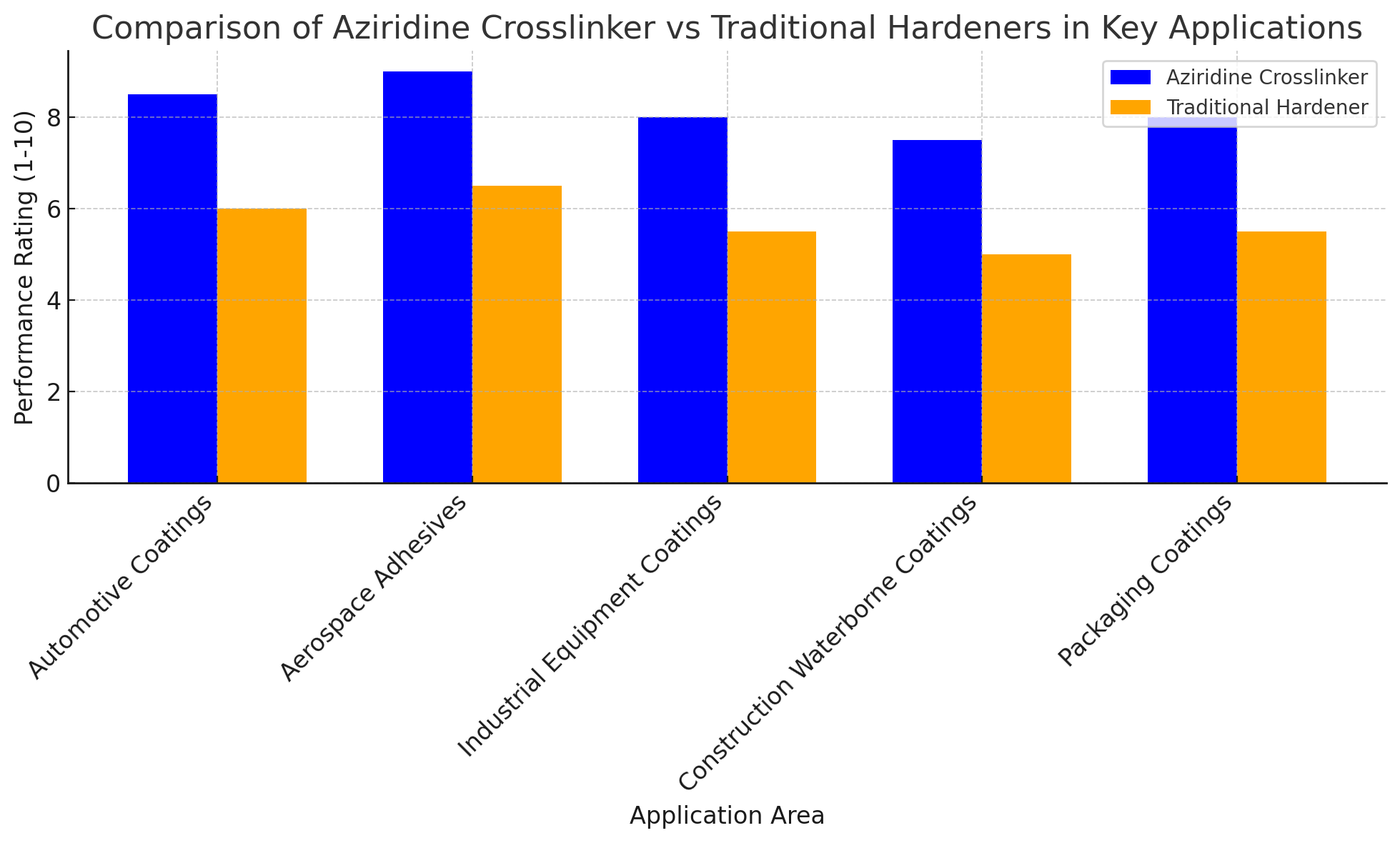
Crosslinkers are essential in polymer chemistry, enhancing material strength and durability. While traditional hardeners like isocyanates and melamine have been widely used, aziridine crosslinkers offer superior performance. In this article, we'll explore five key areas where aziridine crosslinkers outperform traditional hardeners in adhesives and coatings.
Enhanced Adhesion in Automotive Coatings
Superior Bonding with Metal and Plastic Substrates
Automotive coatings must adhere to various substrates, including metals, plastics, and composites. Traditional crosslinkers often struggle to bond effectively with these challenging materials. Aziridine crosslinkers, however, create strong chemical bonds with a broad range of substrates, providing more reliable adhesion for automotive parts. This enhanced bonding ensures long-term performance and durability of coatings in the automotive industry.
Resistance to Environmental Stress
Automotive coatings face exposure to extreme weather conditions, UV radiation, and chemical exposure. Aziridine crosslinkers offer superior resistance to these stresses compared to traditional hardeners. By forming more robust bonds and offering greater protection against degradation, aziridine crosslinkers contribute to the longevity of automotive coatings, ensuring they maintain their integrity for a longer period.
Faster Curing and Lower Temperature Requirements
In the automotive industry, faster curing times and lower temperature requirements are crucial for boosting production efficiency. Aziridine crosslinkers enable automotive coatings to cure quickly at ambient or moderate temperatures, reducing energy consumption and improving manufacturing efficiency. This faster curing process also translates into shorter production cycles, making it an ideal solution for manufacturers looking to optimize their operations.
Improved Durability in Aerospace Adhesives
Enhanced Adhesion under Extreme Temperatures
Aerospace adhesives are subjected to some of the most extreme conditions, including high temperatures and rapid temperature fluctuations. Aziridine crosslinkers are highly effective in enhancing the adhesion of aerospace adhesives, even under these challenging conditions. Their ability to withstand extreme temperatures makes them ideal for use in aerospace components that require durable bonding.
Resistance to UV Radiation and Chemical Exposure
Aerospace adhesives must also resist exposure to UV radiation, harsh chemicals, and high levels of moisture. Aziridine crosslinkers excel in providing superior durability in such environments. The chemical structure of aziridine crosslinkers helps prevent degradation from UV light and chemicals, making aerospace adhesives more resilient and longer-lasting.
Longer Lifespan for Aerospace Applications
One of the key benefits of aziridine crosslinkers is their ability to extend the lifespan of aerospace adhesives. By offering improved resistance to wear, environmental stress, and thermal aging, aziridine crosslinkers ensure that aerospace components maintain their adhesive properties over time. This leads to a more durable, longer-lasting performance in high-stress environments like those found in the aerospace industry.
Stronger Protective Coatings for Industrial Equipment
Increased Wear and Tear Resistance
Industrial equipment, such as machinery, tools, and heavy-duty equipment, faces constant mechanical stress. Traditional coatings may not be able to withstand such intense wear and tear. Aziridine crosslinkers, however, improve the mechanical strength of protective coatings, significantly enhancing their ability to resist abrasions and physical damage. This results in longer-lasting protection for industrial equipment.
Protection Against Harsh Chemicals
In industrial settings, equipment is often exposed to a variety of corrosive chemicals. Aziridine crosslinkers are highly effective in improving the chemical resistance of coatings, making them ideal for protecting machinery in chemical processing, manufacturing, and heavy industries. Their superior chemical resistance ensures that industrial coatings remain intact and functional even in harsh environments.
Resistance to Abrasions and Scratches
Aziridine crosslinkers also contribute to better resistance against abrasions and scratches. For industrial equipment, this is crucial to maintain the appearance and performance of machinery. The enhanced durability provided by aziridine crosslinkers helps protect industrial coatings from wear, ensuring that equipment remains in top condition for longer.
Waterborne Coatings in Construction
Improved Adhesion on Building Materials
Construction coatings need to adhere to a wide range of materials, including wood, concrete, metal, and plastics. Aziridine crosslinkers enhance the adhesion of waterborne coatings on these diverse substrates. Their ability to form strong chemical bonds ensures that construction coatings provide durable protection, even in challenging conditions, such as outdoor environments exposed to moisture and temperature fluctuations.
Fast Curing Times for On-Site Applications
In construction, time is of the essence. The faster a coating cures, the sooner construction projects can progress. Aziridine crosslinkers enable faster curing at lower temperatures, which accelerates on-site application and reduces downtime. This speed of curing is particularly beneficial for large-scale construction projects where efficiency is critical.
Sustainability in Building Projects
Sustainability is an important consideration in modern construction. Aziridine crosslinkers contribute to the development of more eco-friendly coatings. By reducing the need for high-temperature curing and lowering VOC emissions in waterborne coatings, aziridine crosslinkers help make construction projects more sustainable. This aligns with the growing demand for green building materials and environmentally responsible construction practices.
Eco-Friendly Coatings in Packaging
Enhanced Durability of Packaging Materials
Packaging materials need to maintain their integrity throughout their lifecycle, from production to storage and transportation. Aziridine crosslinkers improve the durability of coatings on packaging materials, ensuring that they remain robust and effective in protecting the contents. By forming stronger, more resilient bonds, aziridine crosslinkers enhance the performance of packaging coatings, making them more reliable in various conditions.
Resistance to Moisture and Environmental Conditions
Packaging materials are often exposed to moisture and varying environmental conditions. Aziridine crosslinkers improve the resistance of packaging coatings to moisture, preventing damage to the packaging material and preserving the quality of the products inside. This is particularly beneficial for food, pharmaceuticals, and other moisture-sensitive products.
Supporting Sustainable Packaging Solutions
Sustainability is increasingly important in the packaging industry. Aziridine crosslinkers play a significant role in the development of eco-friendly packaging coatings. By reducing VOC emissions and enabling more efficient curing processes, aziridine crosslinkers help packaging manufacturers create more sustainable products. This supports the industry's efforts to reduce environmental impact and adopt greener solutions.
Conclusion
Aziridine crosslinkers are transforming coatings and adhesives in various industries. From automotive to packaging, they offer superior adhesion, durability, and environmental resistance. With faster curing and energy efficiency, these crosslinkers help manufacturers enhance product performance. As sustainability becomes more important, aziridine crosslinkers will remain crucial in developing high-performance, eco-friendly formulations. Manufacturers, such as MSN Chemical, can leverage these solutions to meet growing demands for durability and efficiency.
FAQ
Q: What are aziridine crosslinkers, and how do they work?
A: Aziridine crosslinkers are chemical compounds used to bond polymer chains, enhancing adhesion, durability, and resistance to environmental stress. They react with functional groups to form strong covalent bonds.
Q: How do aziridine crosslinkers outperform traditional hardeners in automotive coatings?
A: Aziridine crosslinkers provide superior bonding, faster curing times, and better resistance to environmental stress, making them ideal for automotive coatings compared to traditional hardeners.
Q: Why are aziridine crosslinkers more eco-friendly than traditional hardeners?
A: Aziridine crosslinkers reduce VOC emissions and offer more sustainable solutions by improving energy efficiency and reducing the need for harsh chemicals in formulations.
Q: What makes aziridine crosslinkers ideal for aerospace applications?
A: Aziridine crosslinkers enhance adhesion under extreme temperatures, improve resistance to UV radiation and chemicals, and extend the lifespan of aerospace adhesives.
Q: Can aziridine crosslinkers be used in industrial coatings?
A: Yes, aziridine crosslinkers enhance wear resistance, chemical protection, and scratch resistance, making them ideal for protective coatings in industrial settings.
Q: How do aziridine crosslinkers improve waterborne coatings in construction?
A: Aziridine crosslinkers improve adhesion on construction materials, reduce curing times for faster on-site application, and support eco-friendly, low-VOC building projects.


